


Projects must never be approved on a whim
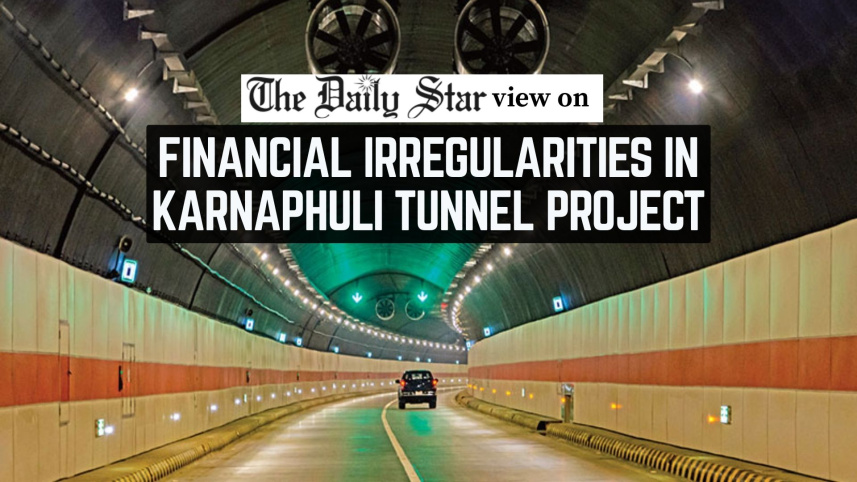
That the Karnaphuli Tunnel has been a loss-making project is well-known, but the amount of money wasted and possibly misappropriated in building this white elephant, as revealed by the Implementation Monitoring and Evaluation Division (IMED), is simply shocking. According to a report by this daily, the IMED, under the planning ministry, found irregularities amounting to Tk 1,616 crore in the Tk 10,689.42 crore project.
One of the absurd irregularities found by the IMED is the money spent on tree plantation: Tk 48 crore was spent with no tree to show for it. Besides, bungalows, motels, a convention centre, and even a museum were built as part of the project, spending Tk 504 crore, whereas no direct road connectivity or link to the tunnel was established. According to a report by Prothom Alo, this luxury service area was added to the project in the middle phase of its implementation, allegedly on the behest of Obaidul Quader, the former road, transport and bridges minister. Why such facilities would be needed when a tourism complex near the Parki sea beach in Anwara exists only 1.5 km away was never explained. As transport expert Dr Md Shamsul Hoque told this daily during a 2024 interview, the decision on the Karnaphuli Tunnel project appears to have been made on a whim. And it proved to be a very costly impulse; Tk 5,913.19 crore loan taken to complete the project will have to be repaid to China over 15 years, starting from 2028.

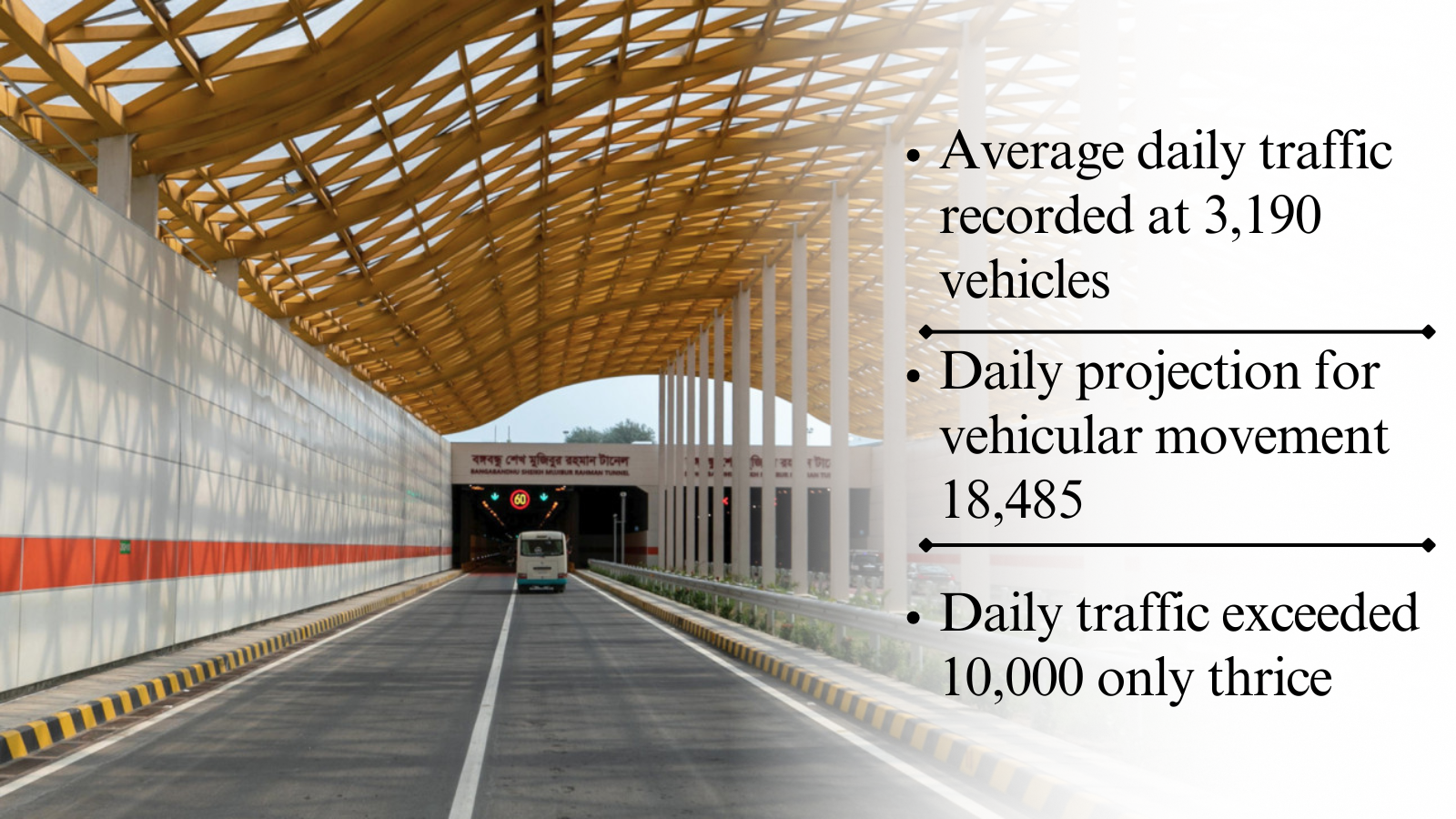
Since the project is not even generating revenue as projected, and the government has to cover its maintenance costs of Tk 36.5 crore a year from its coffers, the debt burden cannot be lowered. The only option is to try and generate some earnings by utilising the idle facilities either by leasing them out to private management or to the Bangladesh Parjatan Corporation. The government should also consider the IMED’s recommendation about fast-tracking other development projects in the area, such as special economic zones, the deep-sea port and EPZs, to increase traffic in the tunnel.
In the meantime, the bureaucratic machinery involved in the decision-making for and implementation of the project must be held accountable. Absence of the political figures primarily responsible should not serve as an excuse to let the administrative personnel involved in this looting escape accountability. The sheer scale of graft unearthed in the megaprojects undertaken particularly during Sheikh Hasina’s last reign indicates that the institutional checks and balances for project evaluation have fallen apart. Although the BNP government has decided not to approve projects that fail to meet economic viability and other key benchmarks, only time will tell how strictly it will follow the policy. We can only hope that whimsical, costly and loss-making projects such as the Karnaphuli Tunnel would never happen again.
 For all latest news, follow The Daily Star's Google News channel.
Comments