


Climate action cannot accelerate without climate justice

New York is talking about speed. Climate Week NYC 2026, happening between September 20-27, has put implementation at the centre of the climate conversation: how to turn commitments into projects, mobilise investment, scale technology and accelerate the energy transition. The 31st United Nations Climate Change Conference (COP31) in Antalya, scheduled for November 9-20, is being framed as an “Implementation COP”, translating commitments into “tangible and trackable progress”.
But implementation raises hard questions: implementation by whom, financed by whom, and for whom?

The questions matter in the geopolitical landscape since COP30 in Belém. Climate diplomacy is unfolding amid wars, energy insecurity, strategic rivalry, and changing patterns of global leadership. Major economies are increasingly balancing decarbonisation with national industrial and energy security interests. COP31 cannot insulate climate action from these realities. It must test whether global leaders, particularly major emitters, are turning commitments into changes in policy, investment, and economic behaviour.
The warning from New York is stark. ActionAid International’s new report, “Debt Fuels the Climate Crisis: How the Finance Flows”, shows that the 65 most climate-vulnerable countries are spending nearly 25 times more on debt repayments than on climate action. Debt servicing absorbs about 65 percent of their combined national revenue, while 93.5 percent are in, or at significant risk of, debt distress. Global South debt repayments are approximately 225 times the grant-based climate finance received from the Global North.
This exposes a profound contradiction. We ask climate-vulnerable countries to implement their Nationally Determined Contributions (NDCs), strengthen adaptation, and build resilience, while debt consumes their fiscal space. The problem is not simply insufficient climate finance. It is the direction of finance.
When governments borrow to recover from climate disasters, debt repayment can squeeze investment in adaptation, public services, and resilience. Pressure to generate foreign exchange can also encourage fossil-fuel extraction and industrial agriculture, reinforcing the cycle. ActionAid argues that debt cancellation could release resources equivalent to six times the basic, unconditional climate plans of the countries studied.
Debt cancellation is therefore not charity. It can restore the fiscal space countries need to finance their own climate action. And these financial accounts miss a cost.
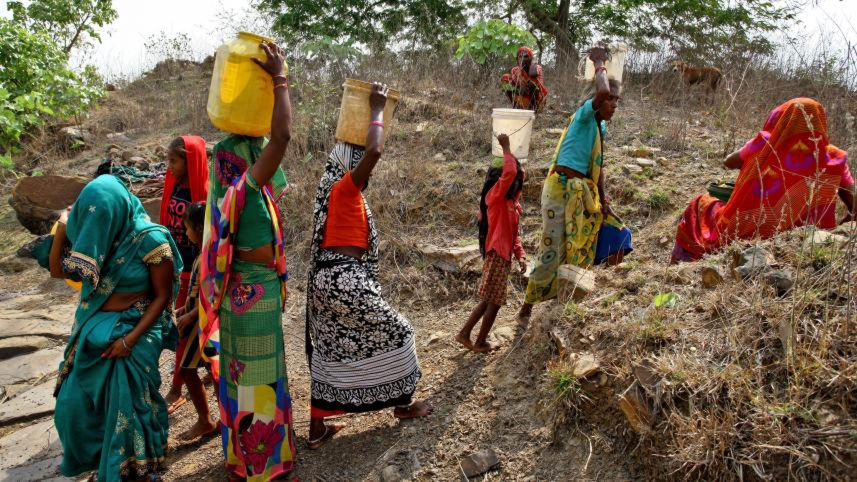
When public systems cannot absorb climate shocks, the deficit moves into households. Someone must collect water, care for children when schools close, support older people during heatwaves, find food when prices rise and rebuild after floods and cyclones. Much of this work is unpaid or underpaid and disproportionately carried by women.
This is why the feminist question is not an add-on to climate implementation. It tests whether implementation is just. The Belém Gender Action Plan, adopted at COP30 for 2026-2034, provides an important benchmark. Its 27 activities and 98 deliverables address gender-responsive finance, data, participation, technology, and care work. Yet, the UNFCCC acknowledges that inadequate technical and financial resources hampered implementation of the previous plan.
COP31 should therefore ask not simply whether countries have gender commitments, but whether they are financing them and whether their NDCs are changing whose work is valued, whose knowledge counts and who has power over climate finance.
The same test applies to the major emitters. More than 130 countries had submitted new NDCs by March 2026, covering close to three-quarters of energy-related emissions. Yet the International Energy Agency found that the new round of pledges does not imply stronger annual emissions reductions than the previous 2030 commitments. That is the implementation gap in plain sight: more plans do not necessarily mean more action.
Meanwhile, Climate Week is celebrating renewables, electrification, investment, and innovation. Its parallel conversations are also making visible what mainstream climate economics often misses. A Climate Reparations Hub in New York, involving organisations including ActionAid and Oxfam, is pushing the conversation beyond finance towards accountability and reparative justice. Other discussions have highlighted care systems as critical climate infrastructure.
The distinction matters. Climate finance asks how much can be mobilised. Reparations ask what is owed, to whom, and who is responsible. COP31 therefore has an opportunity to redefine implementation. If it is genuinely an Implementation COP, implementation must be visible not only in projects in vulnerable countries, but in the policies, budgets, and emissions trajectories of the world’s major emitters.
It should mean grant-based climate finance, debt cancellation where debt is unjust and unsustainable, and a financial architecture that recognises climate vulnerability rather than penalising it. It should mean implementing the Belém Gender Action Plan with resources and accountability, not leaving it as another multilateral promise. Most importantly, power must move with the money.
Women, Indigenous peoples, young people, informal workers, and frontline communities cannot remain the subjects of resilience while others decide what resilience will be financed.
Climate Week has asked how fast climate action can move. COP31 should ask whether global leaders are moving with it and whether they are willing to change the systems that determine who pays, who benefits, and who decides. Because acceleration without redistribution can reproduce inequality faster.
The real measure of an Implementation COP is not how many projects are announced in Antalya. It is whether major emitters are changing course, whether climate-vulnerable countries gain the fiscal space to act, and whether those facing the greatest risks gain more resources, rights, and power to shape the future.
Farah Kabir is country director at ActionAid Bangladesh.
Views expressed in this article are the author's own.
Follow The Daily Star Opinion on Facebook for the latest opinions, commentaries, and analyses by experts and professionals. To contribute your article or letter to The Daily Star Opinion, see our guidelines for submission.
 For all latest news, follow The Daily Star's Google News channel.
Comments