


BNP's Awami League dilemma

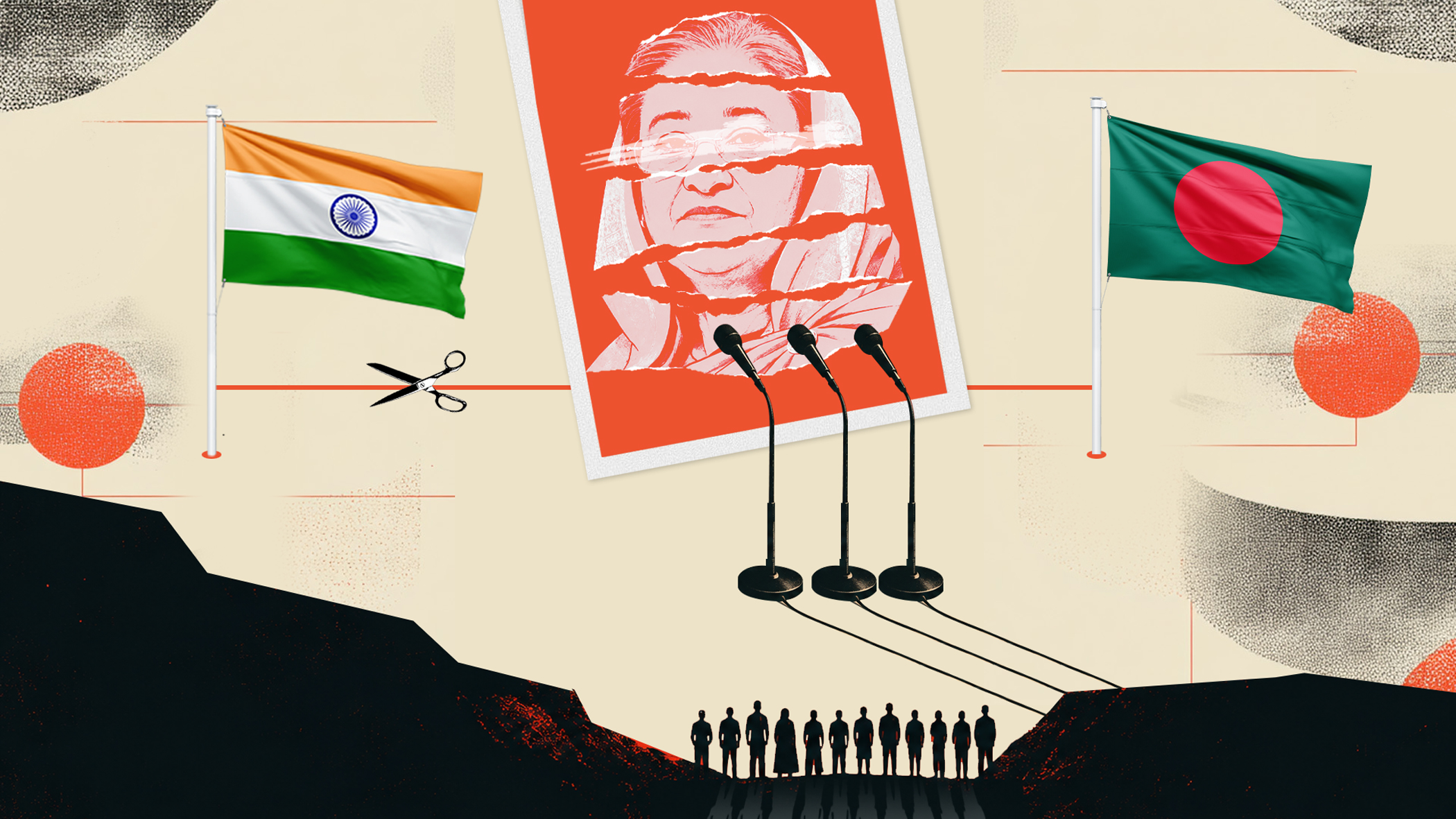
The foreign ministry issued an unusually strong rebuke to New Delhi over ousted prime minister Sheikh Hasina's press event in India, which went ahead despite Dhaka's objections to her public appearance on the second anniversary of the July Uprising. Calling the event “detrimental” to Dhaka-Delhi ties, it said “convicted mass murderer Hasina and her mafia enterprise” would never have a place in Bangladesh's polity.
Hours earlier, Prime Minister Tarique Rahman urged “anti-fascist forces” to remain united and refrain from raising unnecessary issues that could destabilise the country and facilitate the return of the “defeated, deposed and fugitive authoritarian forces”.

Statements from other BNP leaders have similarly indicated a hard line towards the Awami League. Whether this reflects a long-term strategy or a response to current political realities remains unclear.
At the Delhi event, Hasina was unapologetic and showed no sign of changing her position. She still appears to have what critics call the "god complex", while choosing not to appear on video.
The BNP endured years of political repression under Awami League rule, and its grievances are understandable. Swallowing decades of bitterness would be difficult. But politics sometimes demands putting long-term national interests above emotion.
Whether Hasina’s announcement of a return is a political stunt or not, the BNP needs to do some soul-searching over how it intends to deal with the Awami League politically. Barely six months into office, the BNP government is already facing a perfect storm.
The economy remains fragile, the job market is weak, and law and order has deteriorated. Rising food, fuel and utility prices are squeezing households. The Middle East conflict could cause prolonged disruption to global oil and gas markets, while a global economic slowdown could hurt Bangladesh's two economic lifelines -- remittances and garment exports.
For a government that came to power after the July Uprising and inherited weakened institutions and a battered economy, these are formidable challenges. Yet voters will ultimately judge the BNP by its ability to restore stability and improve their lives.
Hasina's announcement that she intends to return by December has added another layer of uncertainty.
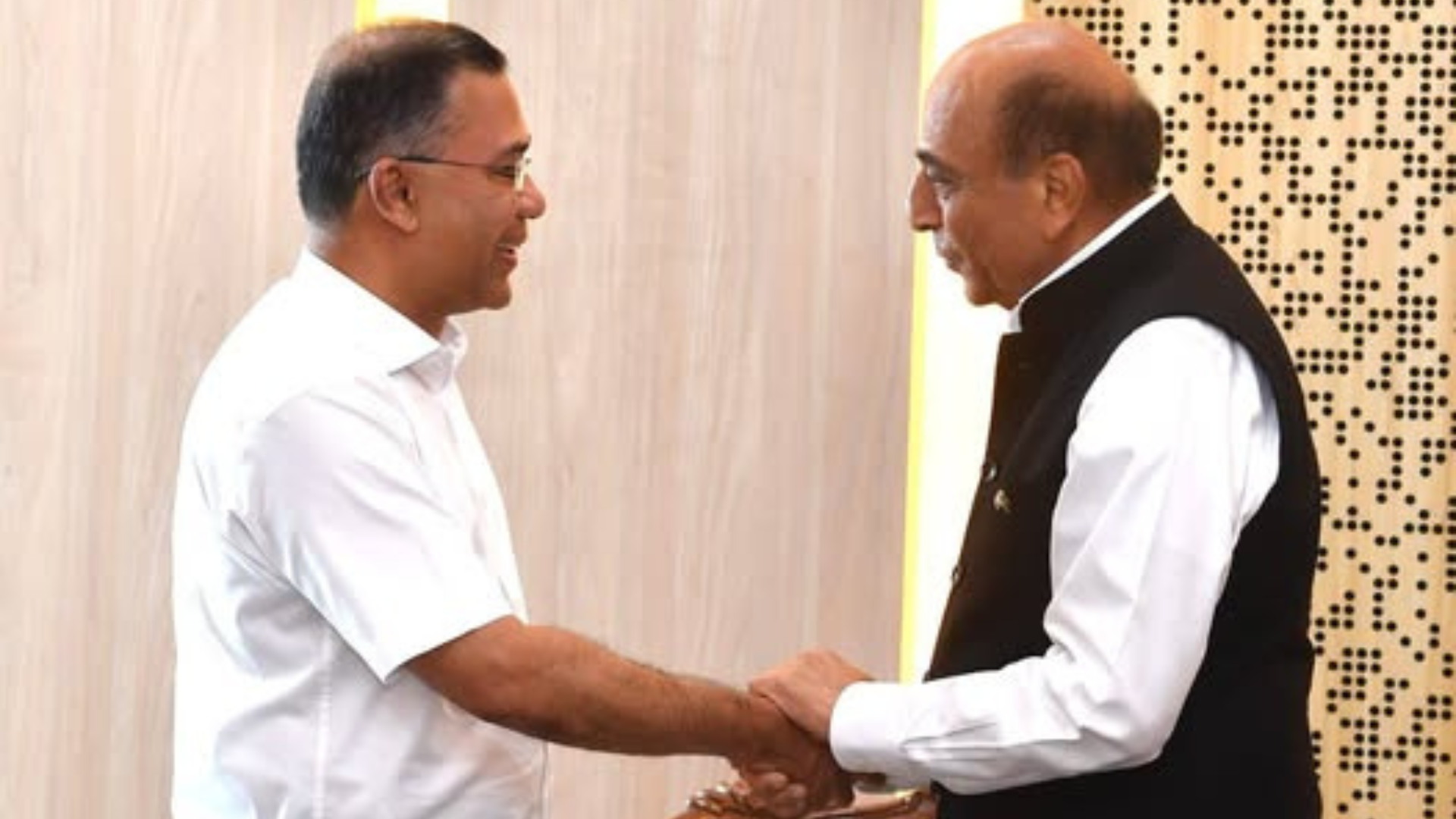
Bangladesh has recently witnessed several high-level diplomatic engagements, some publicised and others not. During his brief visit, US special envoy Sergio Gor met India's high commissioner in Dhaka -- an unusual step. According to media reports, the Indian envoy then travelled to New Delhi the same day for consultations with senior leaders. More recently the diplomatic overtures appeared to heighten with the Indian high commissioner heaping Tarique Rahman with praise. Most significantly, the Indian envoy went back to Delhi immediately after meeting with the Bangladesh PM, a clear indication that India is placing considerable importance on Bangladesh and a lot appears to be riding on the prime minister's decision whether to attend the BRICS summit in September.
Neither government has publicly linked these engagements to Bangladesh's domestic politics. Yet some see them as signs that Washington and New Delhi may be reassessing the regional consequences of the Awami League's continued exclusion from formal politics.
India has long seen the rise of Islamist and hardline groups in Bangladesh as a security concern, especially because of its long border with the country's northeastern states. The US and India also share an interest in countering China's growing influence in the Indo-Pacific.
That leaves the BNP facing a difficult dilemma.
The Awami League's authoritarian rule, weakening of democratic institutions and mass killings during the July Uprising have made it deeply unpopular, particularly among younger Bangladeshis.
Justice is essential for victims, their families and the country's long-term healing.
But justice and political inclusion are not mutually exclusive.
Despite its fall from power, the Awami League still commands the support of a sizeable section of the population. Historically its share of voters has roughly accounted for two-fifths of the electorate. Its appeal rests not only on its organisational base but also on its historic role in Bangladesh's independence.
Critics argue that the Yunus-led interim government's handling of post-uprising politics -- particularly what they see as attacks on the ideals and symbols of the Liberation War and attempts to redefine the country's political narrative -- has inadvertently made the Awami League more politically relevant.
 For all latest news, follow The Daily Star's Google News channel.
 The BNP also faces challenges within its own political camp. Since its founding, it has frequently allied with Jamaat-e-Islami to counter the Awami League. With the Awami League largely absent from competitive politics, however, the very rationale behind that alliance is beginning to erode, exposing underlying tensions between the two parties, as recent clashes involving their student wings suggest. The National Citizen Party’s increasingly aggressive rhetoric can also be seen as part of a broader effort to keep the government under pressure over the Awami League issue, further narrowing the BNP’s room for political manoeuvre.
Some argue that decades of close cooperation have also blurred organisational boundaries, leaving the BNP with many leaders and activists whose ideological affinity lies closer to Jamaat. Should relations between the allies deteriorate further, the BNP could see a significant erosion of its organisational base, with many of its most active cadres shifting allegiance at a time when the party can least afford it.
If the BNP government struggles to deliver amid mounting economic and geopolitical pressures, it risks losing support from multiple directions. Conservative voters could drift further towards Jamaat or other Islamist parties, while pro-liberation and centrist voters, whose political home has been left vacant since the Awami League's fall, may not automatically rally behind the BNP. In that scenario, the party could find itself squeezed from both sides.
Can the BNP afford to weaken its own political base while allowing more space for Jamaat? Or should it take the initiative to create political space for the Awami League? Bangladesh is already deeply polarised, making national unity essential to withstand the gathering global storm. A country of more than 180 million people cannot achieve lasting stability if a substantial section of its population feels permanently shut out of politics.
Creating political space for Awami League does not mean abandoning justice or absolving those accused of crimes. Accountability must proceed through the courts, while democratic competition proceeds through politics.
The greater risk for BNP may be waiting until circumstances force it to act. If instability grows or outside powers push for political compromise, the party could lose the chance to shape events on its own terms. Taking the step voluntarily may serve both Bangladesh and BNP's long-term interests.
There is a lesson in recent history. Many argue that had Hasina stepped down after the 2018 election, she might have returned to power through the ballot. A pragmatic BNP should draw lessons from that experience -- not only to spare Bangladesh another cycle of turmoil, but also to safeguard its own political future.
For the BNP, the real test may therefore be whether it can pursue justice without permanently excluding political competition. Making that difficult choice voluntarily, rather than waiting for circumstances to force it, may be the wiser course for both the country and the party.
Comments