


The young radicals who challenged 19th-century Bengal
8 HOUR(s)
•
In Focus

More men are cooking. But is patriarchy leaving the kitchen?
23 September 2026
•
In Focus
Everyday secularism and the Bangladesh we rarely talk about
22 September 2026
•
In Focus
Reading Sarat Chandra at 150, with empathy
21 September 2026
•
In Focus
Who really owned Britain’s royal jewels?
19 September 2026
•
In Focus
The 25,000-year history of betel nut chewing
17 September 2026
•
In Focus
The world map we know is distorted. Why does it matter?
15 September 2026
•
In Focus
Bengal and the coming of Islam: A story of soil and spirit
14 September 2026
•
In Focus
Xuanzang’s travels to Bengal and beyond : The man, the pilgrim and the Monkey King
11 September 2026
•
In Focus
Professor Anisur Rahman: The economist who put people at the centre
10 September 2026
•
In Focus

Passion for the past
Born on October 1, 1918, in the village of Darikandi under Bancharampur upazila in Brahmanbaria, Bangladesh, Abul Kalam Mohammad Zakariah received his Matriculation Certificate in 1939 from Brindaban High School in Bancharampur and Intermediate Certificate in 1941 from Dacca Intermediate College (currently Dhaka College), Dhaka.
6 October 2019
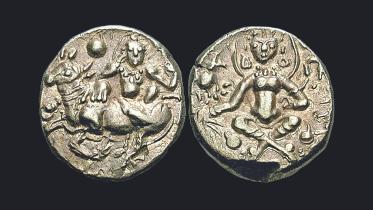
The First King of Bengal
Before the tribes and kingdoms of pre-medieval Bengal could unanimously elect Gopala king in 750 CE, they had to endure a hundred years of utter lawlessness, infighting and bloodshed. We know how Gopala’s Pala Dynasty heralded a golden era in Bengal, little is known about the dark age, and what came before.
29 September 2019
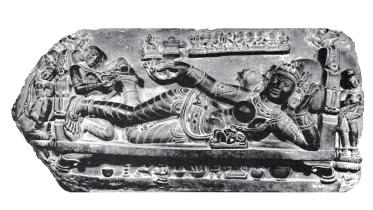
Costumes and ornaments, as reflected in ancient Bengal sculpture
The potters of the present day whose business it is to prepare clay images for worship, never dream of dressing the gods and goddesses made by them in any other garb than those ordinarily worn by the present-day inhabitants of Bengal.
22 September 2019
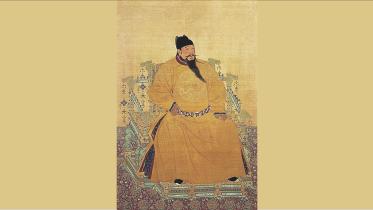
Bengal through Chinese eyes
The following account of Ma Huan was written at the commencement of the fifteenth century. It is a chapter taken from a work, bearing the title Ying-yai-sheng-lan (a general account of the shores of the ocean) compiled by Ma Huan who was an interpreter attached to the suite of Cheng Ho who was sent to the various kingdoms of the Indian Ocean by the Chinese Emperor Yung-lo.
15 September 2019
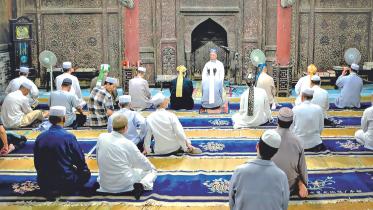
The cultural heritage of China's Muslim community
In her bright head scarves and long, flowy dresses, Yonghua Zheng is a recognisable figure around Sangpo in Henan province, central China. This is because Zheng is an imam – or Ahong – of an all-women mosque in the hamlet.
8 September 2019
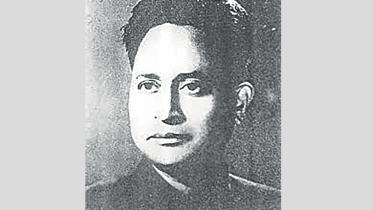
"I am only making a modest contribution to the struggle of my people"
Feroz Ahmed (F. A.): Let me begin with a question concerning a recent development in the East Bengal independence movement, i.e., the formation of a consultative committee consisting of the Awami League, your party and three other parties. Do you think that it is a significant development?
1 September 2019
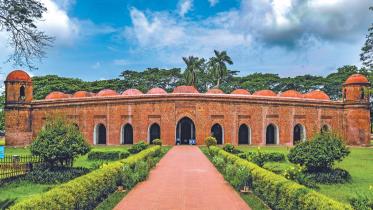
Trails of Khan Jahan Ali
The history and the political landscape of Bengal have been greatly determined by its geographical position, like that of many other countries of the world.
25 August 2019
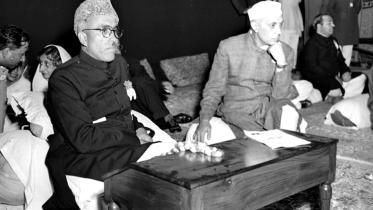
Kashmir: Why Article 370 and why its abrogation will prove to be costly
This year, on August 14 and 15, Independence Day of Pakistan and India, celebrations were tainted with the political tensions that followed the Bharatiya Janata Party led Indian Government’s decision on August 5, 2019 to abrogate Article 370 and Article 35a, that granted special status to Jammu and Kashmir, including the right to have its own constitution and its own flag, and residents’ rights and privileges, respectively.
18 August 2019
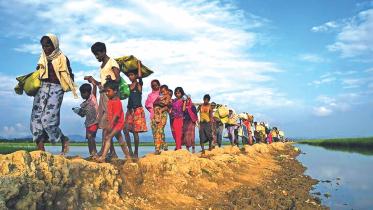
"Rohingya refugee crisis is a time bomb that must be quickly defused to avoid any future flare-up"
Dr. Shamsul Bari, a former Director of UNHCR, talks to The Daily Star about the Rohingya refugee crisis, its local, regional and global implications and the possible solutions to the crisis.
4 August 2019

Unthreading Partition: The politics of jute sharing between two Bengals
The Partition of British India (1947) had complex and wide ranging implications for the jute economy of deltaic Bengal. The border between East Pakistan and India separated Bengal’s jute fields from the jute factories. East Pakistan received more than 75 percent of the total jute growing land of undivided India, whereas all the mills were in India.
28 July 2019
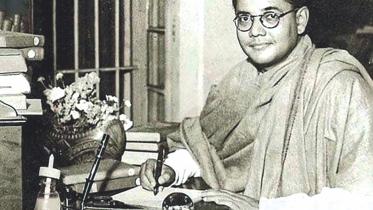
Netaji Subhas Bose in Chattogram
I am enamoured of Netaji. I have been since I was a five-year-old, when I had first listened with wide-eyed wonderment about this legendary hero from the elders in my family.
21 July 2019
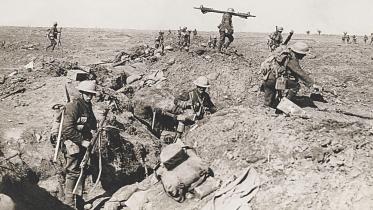
Treaty of Versailles 100 years on
The First World War was contemporaneously described as “the war to end all wars”.
14 July 2019
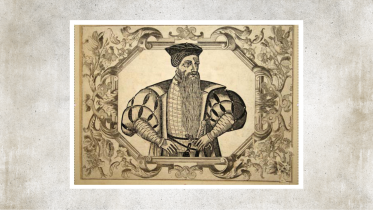
Bengal 500 years ago
Medieval Bengali poems and foreign travellers’ accounts give us the impression that in the fifteenth and sixteenth centuries, Bengal was prosperous–her seaborne trade and a diverse mix of her industrial products added to her prosperity.
30 June 2019
West meets East
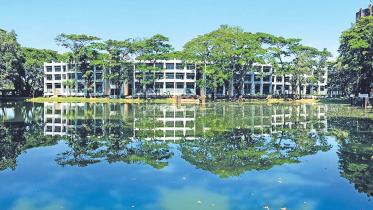
On June 3, 2019, the world of architecture lost one of its greatest designers and theorists, Stanley Tigerman. It is difficult to label the celebrated architect as a modernist or an early postmodernist; his works were wonderful fusion of modernism, technology, playfulness and pragmatic inventions.
23 June 2019
Living like there is no past
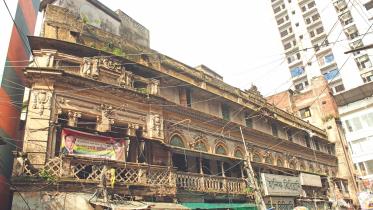
“It looked like a war zone! The century-old three-storey structure was bulldozed to the ground overnight!” Taimur Islam refers to Jahaj Bari in Old Dhaka which was demolished recently in the presence of the local lawmaker. The Member of Parliament claims ownership of the heritage site which is also waqf property.
16 June 2019
Blind spots and biases in Bangladesh Studies
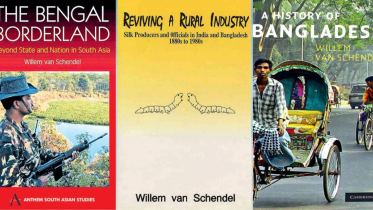
Is there an academic field of Bangladesh studies? Let us limit ourselves to the social sciences and the humanities. Clearly, in these domains a lot of research activity is going on—and a lot more than used to be the case. Our understanding of the huge jumble of people that we call Bangladeshi society is increasing.
9 June 2019
Of reverse travellers and travelogues
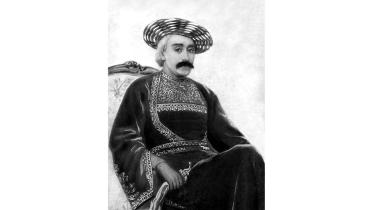
This feature article is a sequel to an earlier essay of mine entitled “Early Indian Voyagers to Vilayet” published in The Daily Star. In this essay, I shall briefly mention a few notable Indian travellers who went to Britain, including those who later wrote about their varied exposure and experiences there on their return home to India, between 18th to mid-20th centuries.
2 June 2019
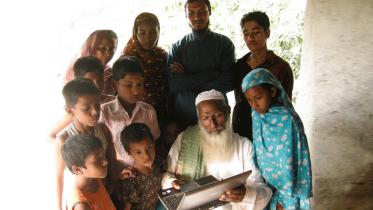
In search of a new 'home'
The peripatetic life story of centenarian Mohammed Shamsul Huq depicts the less-discussed history of Muslim migrants—arriving in hope or leaving in despair—during the tumultuous 20th century. The extraordinary research work Bengal Diaspora: Rethinking Muslim Migration is a welcome effort in filling this gap. The book weaves together threads of experiences of Muslim migrants like Shamsul Huq, who migrated from and settled within the Bengal delta region after 1947.
26 May 2019
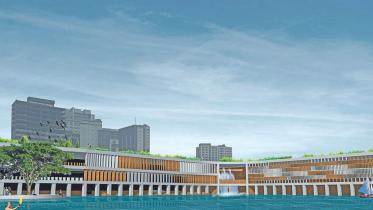
Ethics needs esthetics: Beyond the architecture of good intentions
In the past fifty years, Dhaka has transformed itself from a sleepy provincial centre left over by the British Raj, unchanged through its years as East Pakistan, into one of the world’s burgeoning megalopolises and can boast of being paradigmatic of the many threats human settlement poses to the environment world over.
19 May 2019
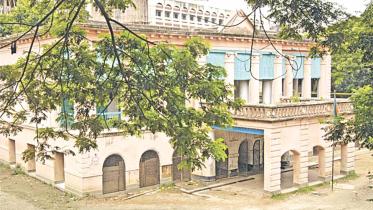
The Pogose School: An Armenian legacy in Old Dhaka
The Pogose School in Dhaka is a familiar landmark in the city. What is perhaps unfamiliar to the Armenian Diaspora around the world is that it was opened in 1848 by local Armenian Joakim Gregory Nicholas Pogose.
12 May 2019