


The young radicals who challenged 19th-century Bengal
9 HOUR(s)
•
In Focus

More men are cooking. But is patriarchy leaving the kitchen?
23 September 2026
•
In Focus
Everyday secularism and the Bangladesh we rarely talk about
22 September 2026
•
In Focus
Reading Sarat Chandra at 150, with empathy
21 September 2026
•
In Focus

Who really owned Britain’s royal jewels?
19 September 2026
•
In Focus
The 25,000-year history of betel nut chewing
17 September 2026
•
In Focus
The world map we know is distorted. Why does it matter?
15 September 2026
•
In Focus
Bengal and the coming of Islam: A story of soil and spirit
14 September 2026
•
In Focus
Xuanzang’s travels to Bengal and beyond : The man, the pilgrim and the Monkey King
11 September 2026
•
In Focus
Professor Anisur Rahman: The economist who put people at the centre
10 September 2026
•
In Focus
Weaponising Paperwork: Rohingya Belonging and Statelessness
Most of us in/of Bangladesh have had to tutor ourselves hurriedly in the world of Burmese history and politics, in the face of “hosting”—almost overnight—what is apparently the world’s largest refugee camp. It is in this spirit, with no claims to expertise on the subject, that I have sketched out my thoughts in this essay.
5 May 2019

The Bastion of the Lalbagh Fort
This essay is largely about the pictorial depiction of the once imposing south-western bastion of the Lalbagh Fort in Old Dhaka, along with a brief history of the fort.
28 April 2019
The ecological cost of railways in colonial Bengal
After conducting a year-long survey of landscape, possible routes and profitability, Macdonald Stephenson, a Scottish engineer, proposed the first Indian railway scheme in 1845.
7 April 2019
Perilous Homelands: The Rohingya Crisis and The Violence of National Territory
We tend to think of the world of nations as the natural order of things. The age of empires now seems archaic, doomed by history. But empires actually organised social space for most of human history.
31 March 2019
A small piece of Armenia in Bangladesh
The Armenian Church of the Holy Resurrection (1781) on Church Road in Old Dhaka highlights a rich tapestry of the Armenian footprint on the commerce, politics, and education of East Bengal.
17 March 2019
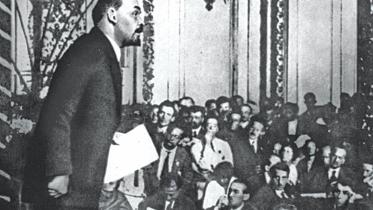
Luhani and the national question in the Third International
In 1921, a small delegation of Indians reached Moscow from Berlin. The team consisted of Bengali and Marathi émigrés who had earlier been nationalist conspirators or “terrorists” who had regrouped in Berlin, but were now eager to participate in the Third Congress of the Communist International.
10 March 2019
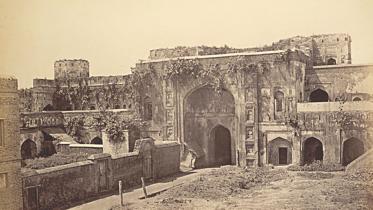
A glimpse into the pre-modern Islamic culture in Bengal
Did you know that the famous Bara Katra, located in the old quarters of Dhaka city, was built to be an exact replica of the garden of paradise? It is also little known that its patron Mughal Prince Shah Shuja (1616–1661AD) was not satisfied with the structure and thus ordered it to be used as a caravanserai instead.
3 March 2019
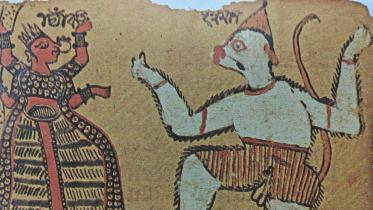
The unexplored treasures of old Bengali manuscripts
Dr Md Shahjahan Mian, Professor of the Department of Bengali, Dhaka University talks to Shamsuddoza Sajen and Moyukh Mahtab about the importance of studying and preserving old Bengali manuscripts to write a comprehensive history of the Bengali speaking region.
24 February 2019

Recovering the stories of the Armenians of Asia
Liz Chater, a family history researcher based in the UK, has been working on the Armenian communities in South Asia since 2010. Currently, she is working with the Armenian Church of the Holy Resurrection in Armanitola on the Bangladesh Armenian Heritage Project, which aims to "build the stories, starting from the ground up" of the Armenian communities of Bangladesh and India. In an interview over email with Moyukh Mahtab, she talks of her own heritage, which led her to her research interest, and of her past and present projects.
17 February 2019
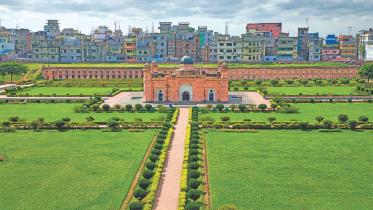
Understanding Mughal Dhaka
Unlike Mughal Emperor Akbar's planned capital at Fatehpur Sikri in Agra or Shah Jahan's capital in Delhi—both constructed with a unitary concept over a relatively short time span—Mughal-era provincial capitals like Dhaka (or Lahore) grew piecemeal, during an extended period of time.
10 February 2019
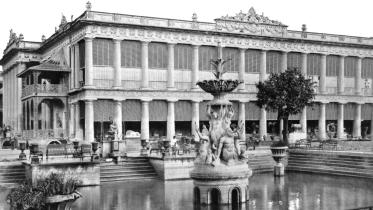
The iconic Marble Palace, Kolkata
On a languid summer afternoon way back in 1973, after a hearty lunch I had settled down comfortably in bed and started to flip through the pages of the latest issue of the prestigious The Illustrated Weekly of India,
3 February 2019
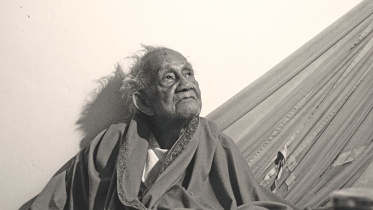
In remembrance of Binod Bihari Chowdhury
January 10 was the birth anniversary of Binod Bihari Chowdhury, the anti-colonial revolutionary famous for his participation in the Chittagong Armoury Raid led by Masterda Surya Sen. Binod Bihari passed away on April 10, 2013. This week, In Focus publishes an interview with the revolutionary, which was originally published in The Daily Star's Weekend Magazine in 2010.
27 January 2019
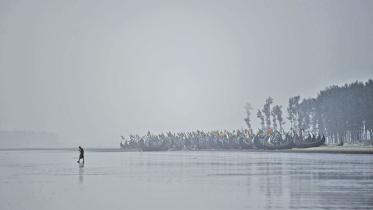
On Black Water and the Bengali Fear of Seafaring
First a disclaimer: this piece does not include any monstrous crocodile that will eat you up the moment you get into its terrain. It is about our national psyche that harbours fear against going out to sea and thinking of our deltaic islands as the limit of our political existence.
20 January 2019

Fidel Castro's March to Victory
When the Cuban dictator Fulgencio Batista fled Havana in the early hours of January 1, 1959, Fidel Castro was 550 miles away, at the opposite end of the island.
13 January 2019
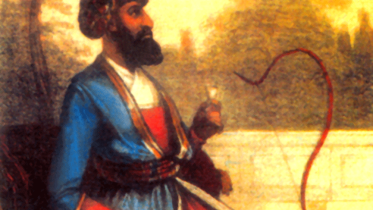
Early Indian Voyagers to Vilayet
In this essay the word Vilayet, which originated during the Ottoman empire to specifically mean a geographical area or district, is used to denote Europe in general and, Britain in particular. More recently, Vilayet (Bilat in Bengali) has been further narrowed down to mean England, or even London proper.
6 January 2019
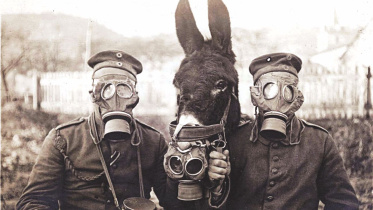
How the deadly water hyacinth invaded Bengal
Wars are not just about strategy, diplomacy, weapons, death and destruction of human life, but also about the way it affects natural environment.
23 December 2018
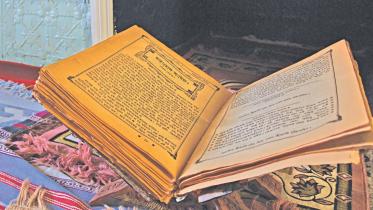
Australianama: The South Asian Odyssey in Australia
"When you begin searching for traces of past South Asians in Australia, it becomes visible that their histories remain inscribed on the land itself. Throughout the Australian outback, beneath the network of dusty roads that criss-cross vast distances lies the camel tracks that South Asian drivers once used to travel." Samia Khatun writes.
16 December 2018
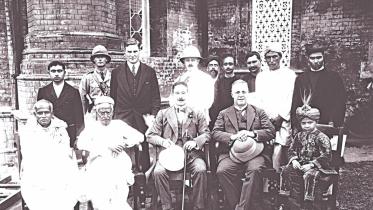
The Legendary Tale of The Bhawal Sannyasi
It would be difficult to find someone in this country today who, having grown up in a typical middle-class Bengali household of the 1950s-60s, has not heard of the fabled tale of the Bhawal Sannyasi (a Hindu mendicant) through family sources.
2 December 2018
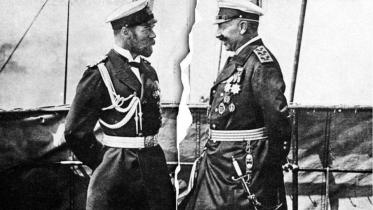
Revisiting the forgotten facts of the Great War
History, more often than not, “is written by the victors”. But, what could perhaps be even more universally accurate is that, “the first casualty of war is truth.” Despite its great devastation and world-changing impact, the First World War is no exception to these age-old expressions; and neither is its commonly known history.
26 November 2018

On the consolations of philosophy
In 2002, Unesco declared the third Thursday of every November as World Philosophy Day, to celebrate "the enduring value of philosophy for the development of human thought, for each culture and for each individual". In celebrating the day, which falls on November 15 this year, In Focus publishes some excerpts from Alain de Botton's The Consolations of Philosophy, published in 2000, which examines everyday problems of our lives, and through the teachings of philosophers ranging from Socrates to Nietzsche, offers insight and understanding to the reader.
11 November 2018