


The changing harmonies of our weddings
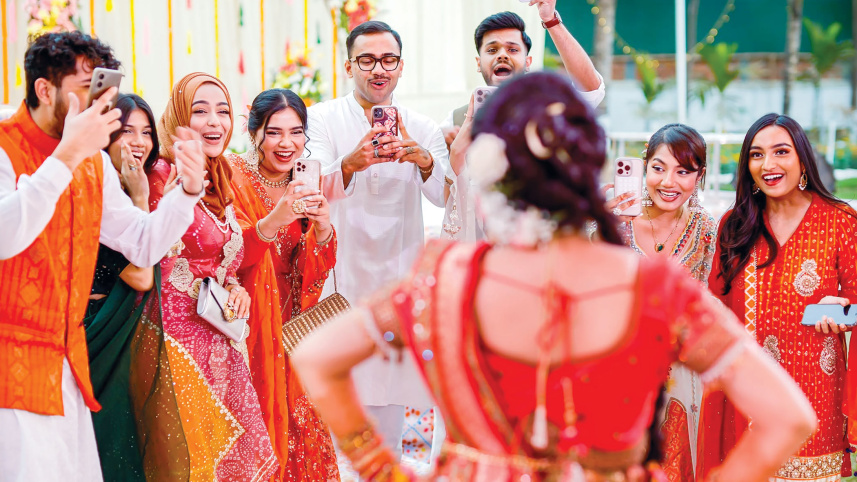
Weddings in Bangladesh have become a multimillion-taka affair. The numbers alone would have sounded absurd to someone planning a wedding just a couple of decades ago. There is a common claim that weddings back then were purely a family affair. Yet the evidence does not support this. Families hired photographers, caterers and decorators just like today. What’s actually changed is how much of the wedding logistics gets outsourced, not whether outsourcing happens at all. The bulk of the planning, design choices and small finishing touches to the whole shindig fell to family members. An aunt sketched the stage layout, A cousin ran errands, another family member arranged the flowers. Today, all these parts may be outsourced to professionals. Hence, the meteoric boom in the wedding economy.
This gradual shift has given rise to the modern wedding economy. Globalisation brought with it a whole new batch of wedding traditions. A more aspirational middle class and rise in disposable income made it feasible to opt for wedding celebrations that do not strictly follow old traditions. Wedding planning became full-time businesses for many. Bridal fashion houses release seasonal collections. There are caterers who specialize only in Bengali wedding menus, and content creators whose entire feed is built around documenting weddings. However, in this process we have sadly lost the age-old tradition of the cameras zooming in on people’s faces during the wedding feasts.

Tradition Meets Modern Taste
Couples used to have almost no say in their own wedding. In the last couple of decades many couples decided to get married much later in life, often when they are more financially independent. This newfound decision-making power means the couples are now picking their own decor, choosing their guest list, sometimes even setting the budget themselves.
Some wedding traditions have not changed much. Gaye holud is still all about the yellow of the turmeric.
Elders giving their blessings, songs sung by whoever knows the words, gifts passed between two families meeting for the first time as one. What’s ballooned is the scale. A rooftop gathering has, for a lot of urban families, turned into an event with a full catering menu, a hired DJ, sometimes even a performer flown in for the night.
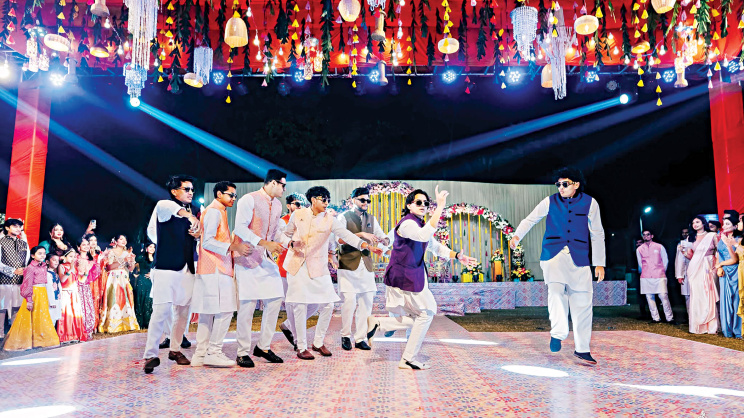
Mehedi has probably changed the most. It used to mean the bride and a handful of women in someone’s living room, henna cones passed around for hours. Now, the venue has shifted to rented halls or open lawns. Cuisine now includes east meets west fusion menu, a photo booth in the corner, and choreographed dance numbers. The groom writing the bride’s name somewhere on his palm has become almost expected rather than a sweet surprise. Extravaganza and spectacle have taken centre stage.
Bou bhaat used to be the first meal a new bride cooked for the in-laws. Most people now just call it the reception or waalima. Western-style decor, catered food stations, even a fuchka stall next to the mishti table on occasion has become the norm. Somewhere along the way, a wedding cake became a non-negotiable part of these events.
What all of these have in common is the need for professional logistics. No longer are weddings bound to biriyani and DIY décor, the need for wedding decorators, multi-cuisine caterers, designer fashion, florists and even bakers are ever increasing.
Fashion tells its own version of this story. The red Benarasi saree used to be the only real option for a bride. Plenty of brides still wear it for the actual ceremony, but everything around it has opened up. Lehengas in blush and sage have taken over mehendi and gaye holud outfits. Brides are opting for thin lines and minimal patterns in Henna. Grooms have entered the picture in a way they never did before. Sherwanis now come in navy, in dusty rose, in colours chosen specifically to match the bride rather than the plain white that they used to be.
There’s also a quieter shift toward sustainability starting to show up. Rented decor instead of custom pieces built once and thrown away. Digital invitations replacing printed cards. Families setting a strict headcount instead of over-ordering food out of habit. It’s not everywhere yet, but it’s a real thread, and probably one that grows.
Of course, not everything applies to every corner of the country. In Dhaka, a wedding today usually means a hotel ballroom, a planning agency on retainer, and a per-guest budget that would have seemed wasteful a generation back. Away from the metropolitan, the marquee and community hall are still standard, food still comes from local cooks and neighbours still show up to help. But that is also changing. Rural families are booking Dhaka-based photographers for a single ceremony, or driving hours just to get a specific makeup artist for the bride.
Logistics of a Modern Wedding
All these changes mean organizing a wedding has become a logistical challenge.
Now, many families use hotels for their weddings. They use hotel ballrooms, not marquees, for the gaye holud. They also use ballrooms for the main ceremony and for the reception.
There are two reasons for this. The first reason is comfort. In a hotel, the air conditioning operates correctly for 300 persons. The parking area stays in good order.
The food supply does not run out.
The second reason is convenience. One hotel package includes the venue, the food, and rooms for relatives who come from other locations. The family makes one booking, not five. That convenience has stretched weddings well beyond a single evening. Some families are now booking multi-day trips to Cox’s Bazar or Sylhet, turning a wedding into something closer to a festival.
The same applies to relatives flying in from abroad. What used to mean everyone booking their own flight and hoping the dates lined up now often gets handled through one coordinated booking, taking that entire headache off the family hosting.
Money has changed shape too, maybe more than anything else. Gift money used to travel in cash, carried home by whichever relative happened to be visiting, or moved through informal networks that were slow and occasionally risky. Now it can land instantly through a remittance app, sometimes while the ceremony is still going on. Vendors are seeing the same shift. Caterers and decorators increasingly get paid digitally instead of in cash, which cuts down on disputes and speeds up how fast they can move between events during peak season.
 For all latest news, follow The Daily Star's Google News channel.
 Here comes the cost breakdown
All of this matters more because the actual cost of a wedding has climbed. Gold prices are up, catering costs more, hotel venues cost more than a rented hall ever did. Some families are cutting back on guest lists and going simpler on invitations, while spending far more on photography and videography than they used to. Running a wedding that spans multiple cities and sometimes multiple currencies takes more than a good plan. It takes payment tools fast enough to keep up, tools that simply weren’t available to the last generation.
Bangladeshi weddings haven’t lost what they once were. They’ve just scaled along with our imaginations, further than before, in every direction. At the core, the rituals at its centre haven’t moved much at all.
Comments