


Is anyone too young for a heart attack?
On October 3 last year, a 26-year-old Jagannath University student died after suffering a heart attack at a restaurant near his campus in Dhaka.
For anyone the news was difficult to comprehend. Heart attacks are still widely associated with the elderly, making it easy to assume that young adults are largely protected from them.
But age alone does not protect the heart.

Bangladesh’s current cardiovascular picture shows why heart health cannot simply be treated as a concern for later life. According to the World Health Organization’s latest Bangladesh hypertension profile, 2.28 crore adults aged 30–79 were living with hypertension in 2024. Hypertension affected 28% of adults in this age group, while only 16% of those with the condition had their blood pressure controlled.
A newly published 2026 study provides another indication of cardiovascular risk in Bangladesh. Published in BMJ Public Health, the study analysed 2,782 adults aged 40–69 from the nationally representative WHO STEPS Bangladesh survey using the updated 2019 WHO cardiovascular-risk prediction models.
It found that 10.3% of participants had an estimated 10-year cardiovascular disease risk of at least 10% using the laboratory-based model, compared with 9.2% using the non-laboratory model. Risk was higher among men, while higher waist-to-hip ratio and elevated LDL cholesterol were among the factors associated with higher predicted risk.
The figures are estimates of cardiovascular risk, not predictions that these participants will have heart attacks. But they show that the factors behind cardiovascular disease can develop long before an event occurs.
When age creates false reassurance
According to Prof. Dr. A K M Shamsul Bari, Professor of Cardiology at Dhaka National Medical College & Hospital, the assumption that young age itself protects people from heart attacks can be misleading, particularly among young men.
For younger women, Bari said hormonal factors can provide substantial protection but he said that young men should not be considered protected from coronary artery disease.
“Family history of coronary artery disease is important,” he said, especially when there has been premature death in the family.
Bari said younger adults who suffer a heart attack can also have risk factors such as dyslipidaemia or diabetes.
He explained that older people may have developed collateral circulation over time, referring to the development of alternative blood vessels that can help maintain blood flow when a coronary artery becomes blocked.
A younger person may not have developed the same degree of collateral circulation, he said, potentially making an acute blockage more dangerous.
A changing lifestyle
For young adults, Bari also highlighted changing lifestyles as a growing concern, including smoking, drug use and dietary habits. He said young people often do not see the food they eat as a risk to their heart health, particularly when they are young and feel otherwise healthy.
Frequent consumption of fast food and other foods high in sodium, sugar or unhealthy fats can add to cardiovascular risk, particularly by contributing to high blood pressure and unhealthy cholesterol levels. These habits, combined with smoking and physical inactivity, can become a concern when they persist over time.
“Drug consumption is a major factor,” he said, while also identifying smoking, diabetes, hypertension and dyslipidaemia among the important risk factors for coronary artery disease.
Bari said he has encountered very young patients with heart attacks, including a 16-year-old who presented with chest pain.
He also recalled seeing young female patients with similar problems. In some cases, he said, their medical histories included the use of oral contraceptive pills, which he identified as one factor associated with coronary artery disease.
Not every chest pain is acidity
 For all latest news, follow The Daily Star's Google News channel.
 One of the dangers for younger people is the tendency to explain symptoms away.
Chest discomfort may be attributed to acidity, anxiety, exhaustion or stress, particularly when there is no known history of heart disease.
But age should not be used as a reason to dismiss potentially serious symptoms.
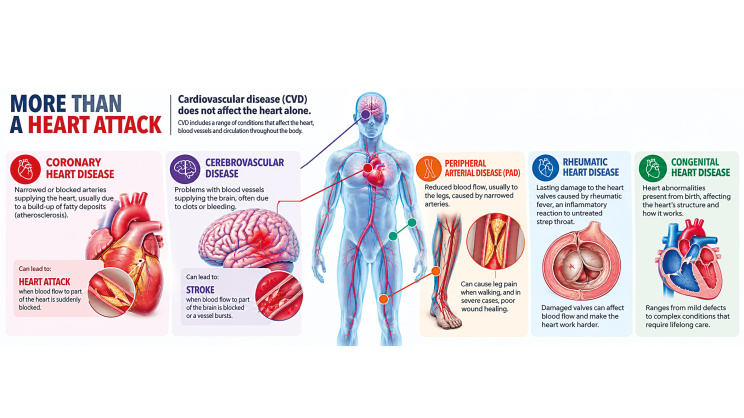
A heart attack can involve pressure, tightness or discomfort in the chest. Symptoms can also include discomfort in the arm, shoulder, back, neck or jaw, as well as breathlessness, sweating, nausea or unusual weakness.
Recognising these symptoms matters because a lack of previous heart problems does not rule out a cardiac emergency.
Heart health cannot wait
The idea that cardiovascular health only needs attention later in life can delay prevention.
Hypertension, for example, can remain unnoticed for years. Bangladesh’s latest figures show that while 28% of adults aged 30–79 had hypertension in 2024, only 16% of those affected had their blood pressure controlled.
For younger adults, understanding their family history and monitoring key health indicators can provide an opportunity to identify problems earlier.
Dr. Mohammad Rafiur Rahman, Senior Consultant, Department of Cardiac Surgery at United Medical College Hospital, similarly stressed the importance of monitoring blood pressure, blood sugar and cholesterol.
He also emphasised maintaining physical activity and paying attention to changes in one’s usual ability to exercise.
For people with suspected coronary artery disease, Rafiur said coronary angiography plays an important role in identifying blockages. According to him, angiography remains the gold standard for assessing coronary blockages, while CT coronary angiography can be considered in appropriate cases.
He said the value lies in identifying disease early. A blockage detected at an earlier stage may sometimes be managed through lifestyle changes and medication, potentially avoiding more invasive treatment.
A 26-year-old dying from a heart attack is not, by itself, proof that heart attacks are becoming more common among young people. But it is a reminder that cardiovascular disease does not always wait for old age.
Perhaps the more useful question is not whether someone is too young for a heart attack. It is whether being young has allowed them to assume that heart health can wait.
A heart attack can happen suddenly but the risks behind it may have been building for years.
Comments