


Comprehensive cardiac care closer to home
A discomfort in the chest after a short walk. Breathlessness that was not there before. Familiar chest pains dismissed as “acidity”.
Such symptoms are often overlooked, but they may also be early warning signs of a heart problem. Recognising them is only the beginning, proper cardiac care to treat them remains the main challenge. In recent times, the way cardiac disease is diagnosed and treated in Bangladesh has changed considerably. Increasingly complex procedures are now being performed right here.

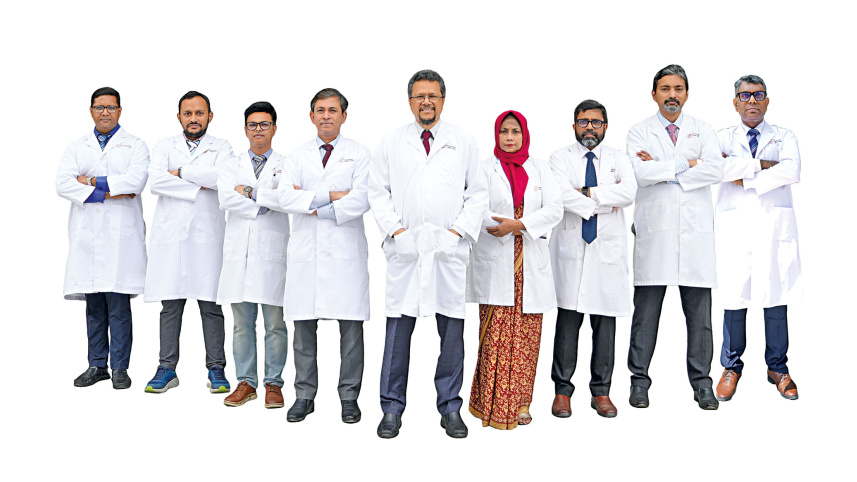
At United Medical College Hospital, Madani Avenue, Dhaka that evolution is reflected in both interventional cardiology and cardiac surgery. Prof Dr. Mohsin Ahmed, Head of the Department and Chief Consultant of Cardiology, and Dr. Mohammad Rafiur Rahman, Senior Consultant of Cardiac Surgery, spoke about advances in wide range of treatment and the importance of recognising heart disease before it becomes critical.
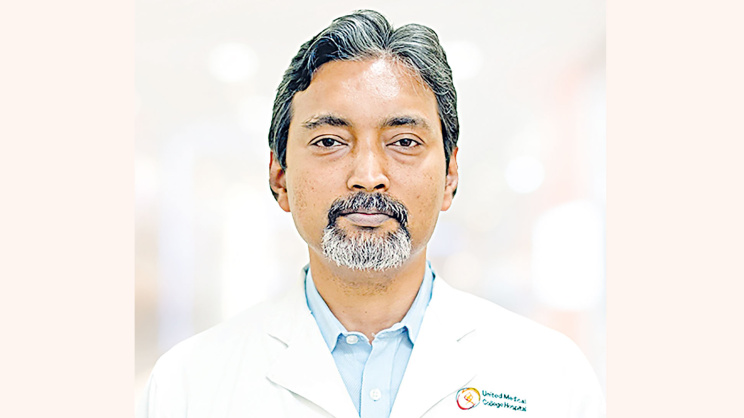
How fit you feel has nothing to do with how fit you are.
Expanding the scope of cardiac care
Prof Dr. Mohsin Ahmed said a significant number of patients from Bangladesh tend to travel abroad seeking advanced technologies and specialized expertise for the management of complex coronary artery disease requiring Complex PCI.
Prof Dr. Mohsin Ahmed stated that advanced interventional cardiology technologies, including intravascular ultrasound (IVUS) and rotational atherectomy (Rotablation), are routinely performed at United Medical College Hospital by the expert Interventional cardiologists. These complex procedures are supported by state-of-the-art Alia IGS 5 and Artis Q Biplane angiography systems, enabling comprehensive and advanced management of complex coronary artery disease. IVUS allows doctors to assess plaque and calcium within an artery, while rotablation can be used in selected cases where severe calcification makes conventional intervention more difficult.
Technology, however, is only part of treating difficult cases. Dr. Mohsin recalled a patient with cardiac blockage, low haemoglobin and gastric cancer whose treatment required cardiology, cardiac surgery and hepatobiliary surgery to work together before surgery could proceed.
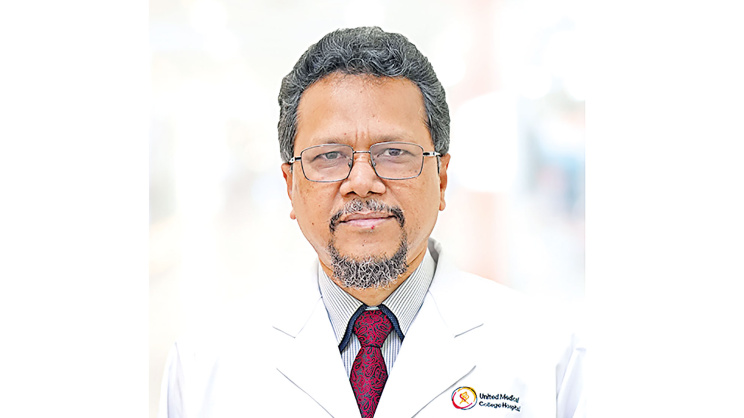
We have the trained resources and the most advanced technology to manage every complex cardiac cases.
When surgery becomes necessary
While cardiologists manage many heart conditions through medication, diagnosis and interventions such as angioplasty and stenting, some patients require cardiac surgery, including coronary artery bypass grafting, valve surgery and operations for congenital heart conditions.
Dr. Mohammad Rafiur Rahman said the cardiac surgery service at United Medical College Hospital is supported by modern heart-lung machines, cardiac anaesthesiology team, advanced anaesthesia systems, infusion pumps, monitoring equipment and ICU ventilators. A robotic surgical system is also being introduced.
He particularly highlighted endoscopic vein harvesting (EVH), a technique used during bypass surgery to collect a vein through a small incision rather than the longer incision traditionally made along the leg.
The approach can mean less pain, a lower risk of infection and a more comfortable recovery, he said. Although EVH has been available in Bangladesh for several years, Dr. Rafiur noted that only a very limited number of hospitals perform it regularly.
The department also performs minimally invasive cardiac surgery (MICS) for selected patients. Instead of the conventional approach, certain procedures can be performed through a smaller incision on the side of the chest.
The technique is not suitable for everyone, Dr. Rafiur stressed, with the patient’s anatomy, heart condition and target vessels determining whether it is appropriate.
When every minute counts
For patients experiencing an acute cardiac emergency, the speed of treatment can be crucial. Dr. Mohsin said United Medical College Hospital provides cardiac services 24/7 through its emergency department, with cardiac specialists available to assess and manage patients. In suitable heart attack cases caused by a blockage, he said primary PCI can be performed within around 30 to 60 minutes.
The hospital has a 16-bed coronary care unit, a 16-bed post-catheterisation unit and two catheterisation laboratories.
Yet access to advanced emergency cardiac treatment remains uneven outside Dhaka. Dr. Mohsin pointed to cases in which patients suffering heart attacks in districts such as Patuakhali still need to be transferred to Dhaka, despite local hospitals and cardiac specialists being available.
 For all latest news, follow The Daily Star's Google News channel.
 He believes stronger public-private collaboration could help make better use of existing infrastructure and expertise.
Recognising the warning signs
For both specialists, early recognition remains central.
Dr.Mohsin cautioned against automatically dismissing new or unusual chest discomfort as gastric trouble. Pressure or discomfort that appears during exertion and improves with rest, he said, should be taken seriously.
Dr. Rafiur similarly stressed monitoring blood pressure, blood sugar and cholesterol, maintaining physical activity and paying attention to changes in one’s usual ability to exercise.
He also emphasised the role of coronary angiography in identifying blockages. According to Dr. Rafiur, angiography remains the gold standard for assessing coronary blockages, while CT coronary angiography can be considered in appropriate cases.
The value, he said, lies in identifying disease early. A blockage detected at an earlier stage may sometimes be managed through lifestyle changes and medication, potentially avoiding more invasive treatment.
Modern cardiac care may offer more ways to treat the heart than ever before. But before the technology, there is still the warning sign: the discomfort after a short walk, the breathlessness that was not there before, the symptom too easily dismissed as acidity. Recognising it could be the first step towards protecting the heart.
Comments