


BB sees weaker growth, elevated inflation ahead
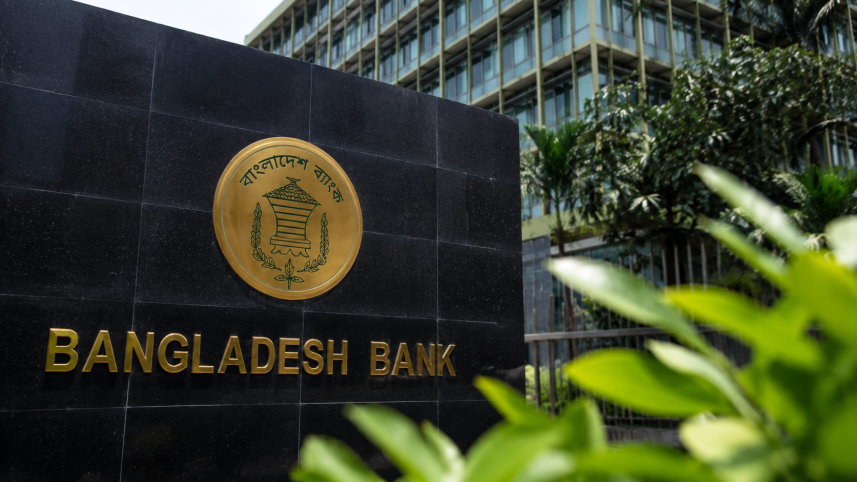
Bangladesh Bank (BB) has said that economic growth will remain subdued in the near term while inflation, although gradually declining, will stay elevated amid persistent domestic price pressures and a weak investment and export outlook.
The central bank shared this view in its first-ever quarterly monetary policy for the October-December period, unveiled today.

The BB cited the World Bank’s forecast on Bangladesh’s economic growth at 4.60 percent for FY27, and the International Monetary Fund’s (IMF) recent downward revision of growth forecast at to 3.50 percent from 4.30 percent and said this underscores the weaker-than-expected growth momentum and considerable uncertainty surrounding the outlook.
“Bangladesh Bank’s assessment is broadly consistent with a gradual recovery rather than a rapid return to the pre-stress growth trajectory,” said the Monetary Policy Statement (MPS).
The BB said high-frequency indicators suggest subdued economic activity in the first quarter of FY27, while a stronger recovery will require improved energy supply, restored business confidence, stronger export demand and renewed private investment, especially in the manufacturing sector.
The new stimulus package and refinance programmes could support the recovery, but their effectiveness will depend on timely implementation and efficient credit allocation, the central bank said.
Inflation may decline gradually if food supply conditions remain favourable, alongside interest rate and exchange rate measures to balance demand-pull and cost-push inflation, it said.
“However, the pace of disinflation — a sustained decline in the rate of inflation — is likely to remain uncertain amid persistent non-food inflation, elevated inflation expectations, higher and volatile global energy prices, and the pass-through from recent administered fuel-price adjustments.”
Implementation of the national pay scale could also add to inflationary pressure and fiscal burden, it said.
The BB said a sustained return to the inflation target will therefore require broad-based and durable disinflation rather than a temporary decline in headline inflation.
Overall, risks remain tilted towards weaker growth and higher inflation, according to the BB.
The central bank said external risks, including escalation of the Middle East conflict, prolonged disruption in the Strait of Hormuz, higher global energy and fertiliser prices, and tighter US monetary policy, could simultaneously weaken growth and increase inflation.
It also cited domestic risks, particularly energy and infrastructure constraints, weather-related agricultural shocks, weak revenue mobilisation, increased government borrowing, potential inflationary and fiscal pressures, delayed banking reform and elevated non-performing loans.
Against this backdrop, the main policy challenge is to support economic activity without compromising the disinflation process, the BB said.
“Given ongoing energy, infrastructure and supply-side constraints, stronger growth will require effective implementation of the stimulus package and targeted refinance schemes, alongside measures to address structural bottlenecks,” it added.
The BB also called for addressing money market pressures stemming from fiscal and capital market developments.
 For all latest news, follow The Daily Star's Google News channel.
Comments