Starting out in criminal law in Bangladesh
The profession of the criminal lawyer feels like an enigma. Books, films, and television have made courtroom thrillers a genre of their own.
But to qualify for this practice, and before they can be engaged to defend any client, a law graduate must first undergo the Bangladesh Bar Council advocateship enrolment process. It is only after they have passed the MCQ test, the written examination, and the viva interview – competing with thousands of other law graduates – that they are deemed qualified to be enrolled as advocates, earning the right to represent a client in court.

Nonetheless, the real struggle only begins with enrolment, with lawyers having to carry on with a survival mindset for their first few years in the profession. Lawyers in general, and young lawyers in particular, work on all types of cases, both civil and criminal, but for those who aspire to criminal practice, their best bet is to work under a senior who specialises in these matters.
“For a beginner lawyer, one of the main challenges is finding a good mentor who can provide proper guidance in both understanding and applying the law,” says Fahim Al Mustafiz, Barrister-at-Law of the Honourable Society of Lincoln’s Inn, and an Advocate of the Supreme Court of Bangladesh. For him, gaining meaningful exposure to advocacy is pertinent.
Learning the law has just one dimension to it, according to Mahboob Ahmed, Advocate of the Supreme Court of Bangladesh and head of chamber at Mahboob Ahmed and Associates, whose career as a criminal trial lawyer spans from 1974 to the present day. In his opinion, it is only after you enter the practice that you truly begin to appreciate just how many dimensions it can have.
Many may believe that one such dimension is the moral dilemma associated with defending those accused of crimes. Sadia Afroz, Barrister-at-Law of the Honourable Society of Lincoln’s Inn and Advocate of the Supreme Court of Bangladesh, weighs on the matter: “As an advocate, one may choose not to represent a particular client, but a collective denial of representation would raise a serious issue. The prosecution has the state behind them, but the defendant has no one. In serious crimes such as murder, where the death penalty is involved, how can there be a fair trial if the accused does not have access to representation?”
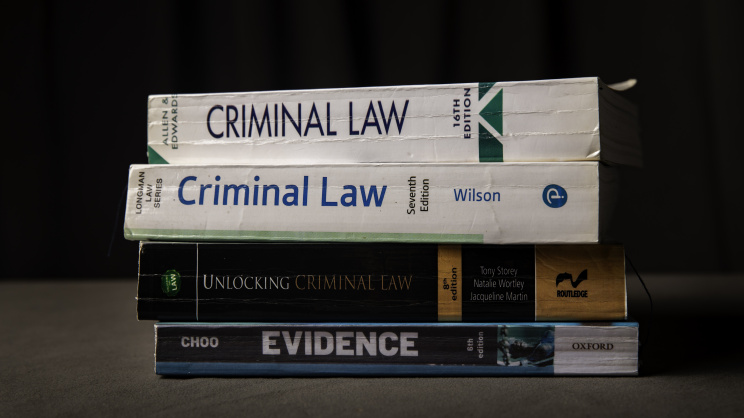
In a trial, it is the prosecution that has to frame the charges and prove them against the accused, while the defence acts as a “check-and-balance” to ensure the prosecution discharges its duty correctly.
The foundations of this arrangement lie in the central maxim of “innocent until proven guilty”, where an accused is entitled to representation and have their side of the story heard. That right is important, even where the case may seem open-and-shut from the outside, even if the accused has already confessed. “A confession can be obtained by intimidation, coercion, incentives, or any other improper means. The job of the defence is to find out and put before the court any such faults in the confession that would exonerate the accused,” says Advocate Mahboob Ahmed.
“The accused in a given case may not have done the crime, and they may be a person seeking justice in the court, entangled in a conspiracy. Therefore, the defence lawyer must not stray from their role under any circumstances because that is their duty in the process of uncovering the truth,” says Md Zakaria Haider, Advocate, Supreme Court of Bangladesh, president of the Court Reporters’ Association, Dhaka, and head of the chamber of Zakaria & Associates.
Anam Hossain, Advocate of the Supreme Court of Bangladesh, Barrister-at-Law of the Honourable Society of Lincoln’s Inn, and partner at Stellar Chambers, clarifies, “The defence lawyer does not say ‘my client is innocent’. Rather, he ensures the best interests of the client are represented while making sure that he does not mislead the court.”
Faran Md Aaraf, a Barrister-at-law of the Honourable Society of Lincoln’s Inn and an Advocate of the Supreme Court of Bangladesh, argues against any moral association between the defence lawyer and the gravity of the crimes. “As per our ethics, if a barrister knows that his client is guilty, they cannot give any positive reaffirmation or make any exculpatory statement on the client’s behalf. This protects us ethically and morally as well,” he adds.
Beyond this, the profession of the criminal defence lawyer is characterised by their dealing with the intricate and long-winded procedures of the criminal justice system, and every step is further fraught with even greater complexity. Advocate Md Mahadi Hasan Apple of the District and Sessions Judge Court delves into the initial stage: “When an accused is brought before the court, the first step is obtaining bail. A written bail application, which we call a 'put-up', has to be submitted. Then you present your arguments before the judge on the grounds for which your client should get bail. If the judge is convinced, he will grant the bail. Otherwise, he will reject it, prolonging custody.”
“Following rejection, another application – a regular put-up – can be submitted seven days later,” he continues. “This means that the next bail hearing can be held after seven days. But if there are any special grounds, you can apply for it three or four days later.”

Obtaining bail can be a tiresome affair, according to Barrister Anam Hossain: “Let’s say you petitioned for bail in the Magistrate’s Court but did not get it. So, you come to the Sessions Court, but you may not get it here either. Then you go to the High Court, and if you don’t get it there, you may have to start the process right from the beginning. This cycle may take up half a year. It’s a vicious cycle.”
“It may feel pointless. One might know that they will not get bail at the Magistrate’s Court, or even at the District Court, and that they may only get it at the High Court level, nonetheless, they’ll still have to go to the first two courts,” he adds.
The criminal trial begins following the conclusion of the police investigation, the producing of a charge sheet, the framing of charges by the prosecution, and the confirmation of sections by the judge. As lawyers belonging to both camps take turns establishing the facts and applying the law in the arguments, the statements given and those extracted during examination-in-chief and cross-examination are the most crucial armaments.
In examination-in-chief, a witness makes statements before the court that are consistent with what they originally said to the police. “Examination-in-chief is an art,” opines Advocate Mahboob Ahmed. “You have to prepare them on what to say and how to say it.”
Barrister Faran Md Aaraf agrees: “There is more to it than just telling your client to tell his story. You need to ask non-leading, open questions that get the story out of them.” In this manner, both sides establish their competing narratives of the events.
 For all latest news, follow The Daily Star's Google News channel.
 It is during cross-examination that a lawyer, facing his opponent’s witnesses, puts the opposing narrative to the test, alongside his own acumen and prowess.

For Advocate Md Zakaria Haider, the first step when facing a witness is to assess them. “By asking one or two questions at the beginning, one can get to understand their mindset as well as the technique that you need to adopt to get to the truth,” he elaborates.
Barrister Faran Md Aaraf discusses his technique: “Before cross-examining the prosecution’s witnesses, you first need to have a case theory. Then, based on that case theory, you need to find holes and gaps in the evidence that will help you create doubt on behalf of the defendant.” He cautions that there is no set formula in the art of advocacy.
“The cross-examination in any given case will depend on its facts,” says Advocate Nushrat Jahan of the District and Sessions Judge Court, concurring with the above. “But generally, you see whether the witnesses’ statements before the court have been identical to their written statements.”
She gives an example: “Police witnesses often cannot stay consistent in the matter of time. So, you can ask them about the duration of their duty or about the preparation of the seizure list, and if they stray from their earlier statement, you suggest that to the court. Then you present the inconsistency in the argument stage.”
A good lawyer also has to be prepared for things to not go according to plan, according to Advocate Md Zakaria Haider. “When you ask a question, and the answer goes against you, it is extremely important to get out of that situation,” he explains. He further asserts his belief that lawyers who are sharp, have good general knowledge, and the ability to think on their feet excel in this practice.
Advocate Mahboob Ahmed, who has dealt with over 20,000 murder cases in his 53 years of legal practice, explains: “The prosecution may pile up evidence until everything seems to be against you, but you have to be aware of what you have got left.”
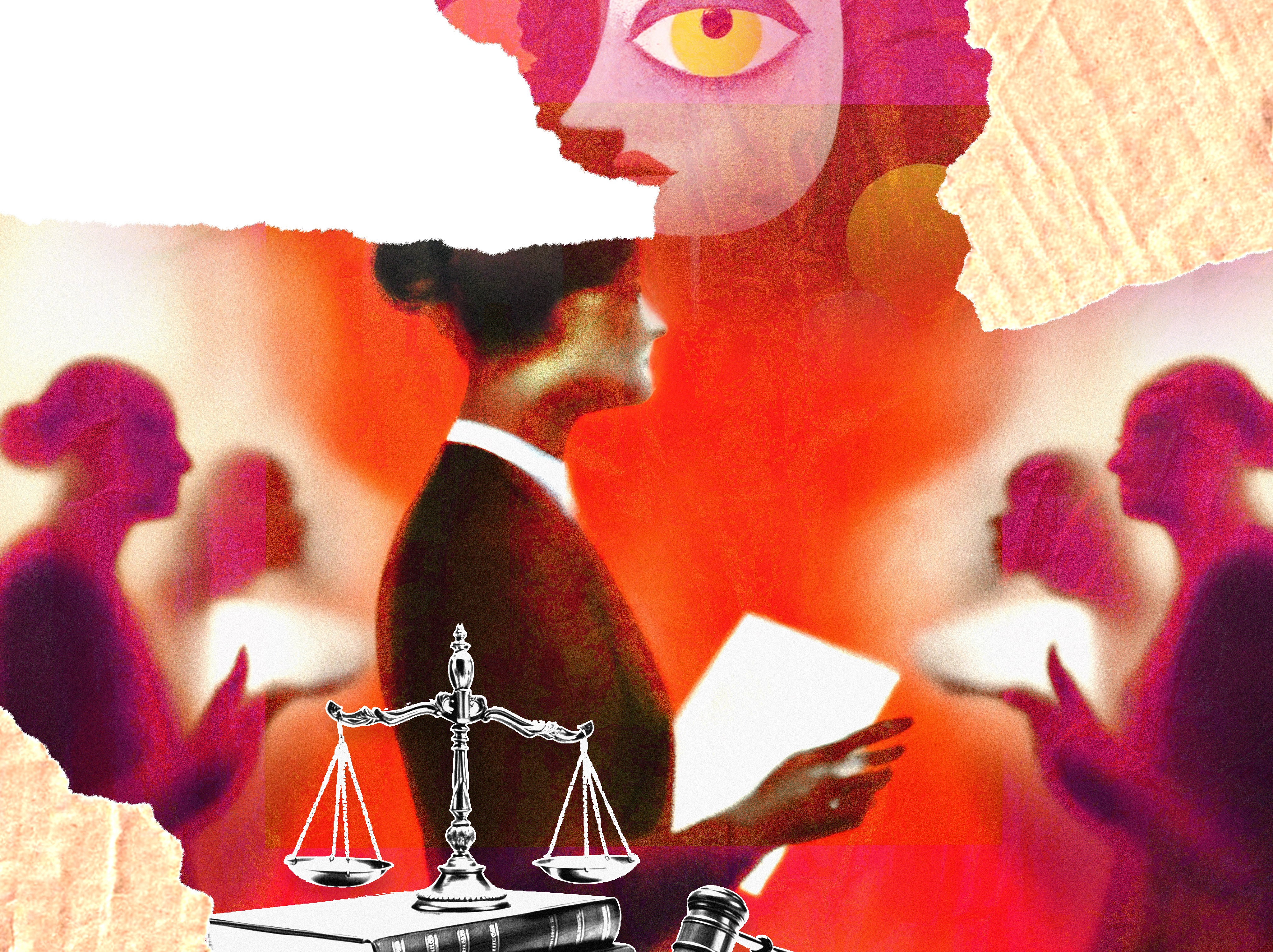
He continues: “The witness is against you, but it is from him that you need to bring out statements that favour your client. The main mantra of it is to know the law under which you plan to discharge your client and also the law that the prosecution can use to win. And when the witness lets something slip that is in your favour, you have to stop and take what you need. The best cross-examiner is he who knows where to stop.”
Highlighting his own approach, he adds, "I see whether the witnesses have said the same thing to the police previously. I also cross-check their statements against medical reports and try to find contradictions. If you want to practise criminal law, medical jurisprudence is essential, and it is not enough to read just one book.”
A conversation with Advocate Mahboob Ahmed reveals his extensive knowledge of different types of bruises and wounds and the types of weapons that cause them, as well as the varieties of firearms and their bullets. Despite his advanced age, he still visits the place of occurrence (PO) of crimes whenever he takes a case. According to him, such knowledge and experience have been instrumental in forging his over five-decade-long career.
Criminal practice, in the view of Advocate Md Zakaria Haider, remains a career of struggle. “It requires you to be both physically fit and maintain a cool head at all times,” he says. “Life imprisonment and the death sentence hinge on the outcome of the case, and a single question can make all the difference.” Thus, learning the art in itself becomes a practitioner’s first case, and one they cannot afford to lose.
Barrister Anam Hossain is of the opinion that criminal practice – particularly bail petitions – has too limited grounds; trials are also dominated by politically active lawyers and those who have large local support bases. For Barrister Faran Md Aaraf, the slowness of due process is a key issue. Advocate Mahboob Ahmed, however, believes the practice is only getting worse with time.
Despite his cynicism about the system, he tells aspirants to hope.
“I always tried to understand and follow my senior as he conducted his cases. I used to read the case files, and alongside that, I used to read legal literature that dealt with those laws. Sometimes, I would take those books to the dining table and read through the night. You have to devote your mind to the dream that you will be a good lawyer. And to become a good lawyer, there is no alternative to perseverance,” he advises.
“Every case is different, and every day brings a lot to learn,” says Advocate Nushrat Jahan. “If you learn to love this, you will enjoy every moment of it.”
Thus, an ever-accumulating reservoir of experiences and the flavours of struggle, hope, ambition, triumph, and despair – all held together by perseverance – collectively represent what it means to be a criminal lawyer in Bangladesh.
Md. Nayeem Haider is a student of law at the University of London

Jahangirnagar University appoints Prof Md Abdul Halim as new proctor

Ducsu leader calls for new name for Sheikh Mujibur Rahman Hall

DU suspends Prof Zeenat Huda over allegations linked to July Uprising

Don’t call me Shibir anymore: Rucsu GS Ammar after losing ‘Sathi’ membership

Barishal University punishes 48 students over ragging incidents

Humour / Why I don’t like voice messages

News/ / Bangladeshi universities in THE World University Rankings 2027
A heart emoji, an alleged beating: CU student handed to police over suspected Chhatra League links