


19 years later, ‘The Big Bang Theory’ still feels like home

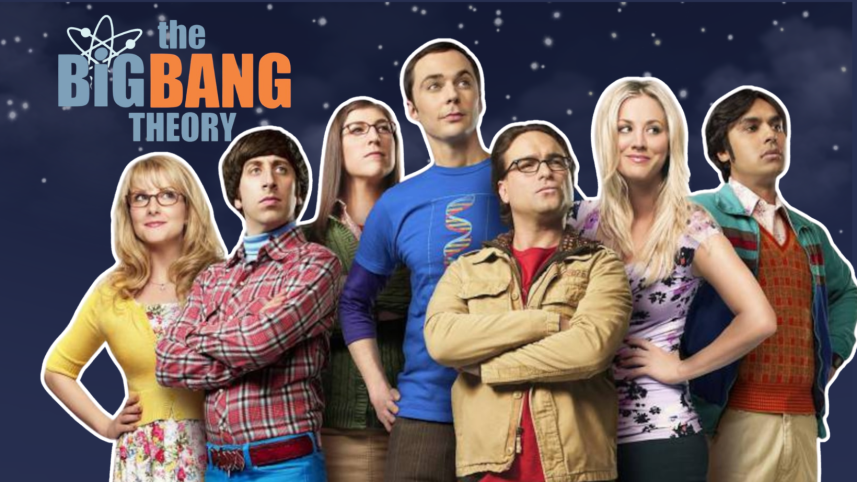
There are television shows you watch, television shows you love, and television shows that somehow become part of the furniture of your life. For me, “The Big Bang Theory” (TBBT) belongs to the third category. You can forget the plot of an episode and still remember the feeling of watching it. You can walk into a room where someone is watching an episode and know exactly what is happening from one line of dialogue. You can put it on while eating dinner, scrolling through your phone, finishing an assignment or simply trying to give your brain a break. Before long, Sheldon is complaining about the seating arrangement, Leonard is saying something he probably should have kept to himself, Raj is overthinking a conversation and Penny is wondering why she continues to spend so much time with these people. And somehow, it feels like coming home.
Nineteen years ago, on September 24, 2007, TBBT premiered on CBS. Created by Chuck Lorre and Bill Prady, the sitcom introduced viewers to a group of extraordinarily intelligent, socially complicated and deeply ridiculous people living in Pasadena, California. At its centre were physicists Leonard Hofstadter and Sheldon Cooper, their friends Howard Wolowitz and Raj Koothrappali, and Penny, the aspiring actress who moved into the apartment across the hall. Amy Farrah Fowler and Bernadette Rostenkowski eventually joined the core ensemble, turning a small group of friends into something that increasingly resembled a family. Twelve seasons and 279 episodes later, the show had become one of television’s defining sitcoms of its era. Yet its greatest achievement might be much simpler: it became a show people could return to.
That sounds almost quaint in today’s television landscape. We live in the age of cliffhangers, sprawling cinematic universes and shows designed to consume an entire weekend. TBBT belongs to a different television rhythm. It gives you 20-odd minutes, a familiar setting, a handful of jokes and the reassuring knowledge that everyone will probably be sitting in the same places next time. And somehow, there is comfort in that predictability. You do not have to remember every detail. You do not need to begin at episode one. You can stumble upon an episode halfway through its run and understand the emotional geography almost immediately. The apartment, the cafeteria, the Cheesecake Factory, the comic-book store and that famous spot on Sheldon’s couch become familiar places. The characters become familiar people. And for fans like me, that familiarity is where the show’s nostalgia lives.
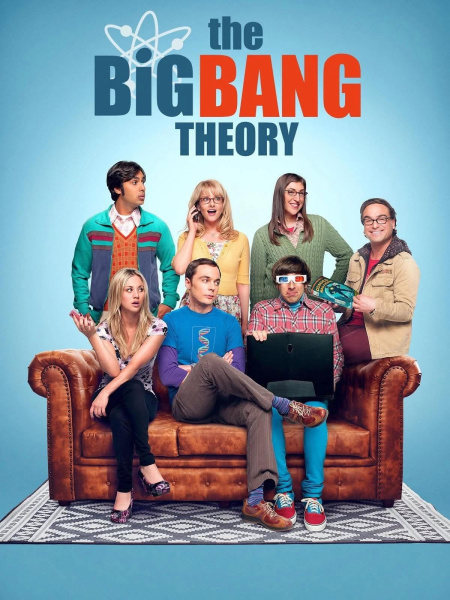
Sheldon Cooper may be the most obvious example. Jim Parsons turned a character built around extraordinary intelligence, rigid routines and spectacularly questionable social instincts into someone audiences could somehow find both exasperating and endearing. Sheldon can turn a casual conversation into a formal negotiation, establish rules for virtually everything and treat a seat on a couch as though it carries constitutional significance. Yet beneath all those eccentricities sits a character learning something deeply ordinary: how to have people in his life. His friendship with Leonard, his relationship with Amy and his growing ability to understand the needs of the people around him give his ridiculousness an emotional dimension.
Watching Sheldon grow becomes one of the pleasures of watching the series. Leonard offers another kind of familiarity. He is brilliant, but his insecurities remain remarkably ordinary. He worries about relationships, approval and whether he measures up. His attempts to navigate life with Sheldon as a roommate provide some of the show’s most reliable comedy, while his relationship with Penny gives the series one of its central emotional threads.
Penny, meanwhile, arrives from a completely different world. She is an aspiring actress surrounded by physicists, engineers and academics. Her presence initially creates a classic sitcom contrast, yet she gradually becomes one of the group’s most important people. Penny understands social situations that leave Sheldon completely lost, while the others introduce her to an intellectual and cultural world far removed from her own. That dynamic gives the show one of its most appealing ideas: everyone knows something that someone else does not. Howard and Raj bring their own forms of insecurity to the group. Howard’s enormous confidence frequently collides with reality, producing some of the show’s most outrageous moments. His eventual journey into marriage, fatherhood and space gives the character a surprisingly substantial evolution. Raj’s struggles with confidence and relationships similarly become part of a larger story about finding comfort in your own identity.
Then come Amy and Bernadette, two characters who changed the chemistry of the group entirely. Amy begins as someone who seems almost perfectly designed to understand Sheldon’s peculiarities and gradually becomes one of the show’s funniest and most emotionally grounded characters. Bernadette brings an entirely different energy: tiny, fiercely ambitious and capable of terrifying almost everyone around her with a single sentence. Together, the characters create something that feels increasingly rare in television: a group you can enjoy simply by watching them exist together. Yet that is also where TBBT deserves a more complicated retrospective.
The show has had its fair share of criticism over the years for relying on stereotypes about scientists, nerds and social awkwardness. Some of its jokes about women, relationships and sexuality have aged differently from the cultural environment in which they originally aired. Its comedy often exaggerates personality traits until they become running gags, and certain jokes can feel particularly tied to the late-2000s and early-2010s sitcom era. Those criticisms form part of the show’s history, and acknowledging them makes a retrospective more interesting rather than less affectionate. Because TBBT also evolved. The early seasons spend considerable time building comedy around the contrast between the socially awkward scientists and the more conventionally social Penny. As the series progresses, the characters become less like fixed archetypes and more like people with histories, relationships and futures. The women become central to the ensemble. The friendships become deeper. The romantic relationships become more mature. Careers change. Families grow. People learn how to compromise. The show gradually becomes less about “nerds” as a novelty and more about people who happen to be nerds. And I think that distinction matters.


For all the jokes about comic books, superheroes, Star Trek, video games and theoretical physics, the show’s most enduring subject remains friendship. The characters are passionate about things. They care deeply about their interests. They argue over them with the intensity of diplomats negotiating a peace treaty. Their enthusiasm becomes part of their charm. And perhaps that is another reason the show has survived so comfortably in our collective watch lists. It makes enthusiasm look fun. There is something particularly nostalgic about watching these characters debate superheroes before the superhero genre became one of Hollywood’s biggest cultural forces. The show captured a period when geek culture was moving steadily from the margins towards the mainstream. Comic books, science fiction and gaming gradually became everyday pop culture, and TBBT was sitting right there in the middle of that transition.
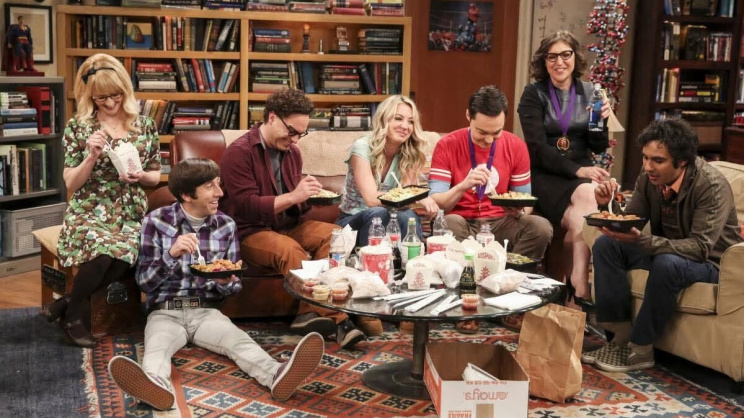
But nostalgia alone cannot explain its staying power. The real reason is comfort. Comfort television gives you permission to stop trying so hard. You do not need to decode it. You do not need to prepare yourself emotionally. You can simply spend some time with people whose rhythms you already know. That makes TBBT almost perfectly suited to dinner. There is something oddly satisfying about eating while Sheldon and Leonard argue across the table, even when the table is technically somewhere in your living room. The characters themselves spend so much time eating together that watching the show while having your own meal feels almost like joining them. Maybe that is why an episode can feel familiar without feeling stale. You remember the joke, but you still laugh. You know where the scene is going, but you enjoy getting there. You know these people, and sometimes that is precisely the point.
Television has spent the last decade teaching us to chase the next big thing. TBBT belongs to the generation of shows that taught us something else: sometimes the best thing on television is the thing you already know you like. So, nineteen years after that first episode, it deserves another place on the watch list. For longtime fans, it is an invitation to revisit an old favourite. For younger viewers who encountered it only through clips, memes or references, it offers a surprisingly large world to discover. For everyone else, there is always the easiest option: put on an episode while you eat.
Let Sheldon complain. Let Penny roll her eyes. Let Leonard negotiate. Let Howard make things worse. Let Raj panic. Let Amy explain. Let Bernadette terrify everyone. For twenty minutes, the universe can wait. After all, this show has already spent nineteen years reminding us that sometimes the most comforting place in the world is a fictional apartment where the same group of friends keeps showing up, ordering takeaway and making each other laugh. And maybe that is why, after all these years, we keep showing up too.
 For all latest news, follow The Daily Star's Google News channel.
Comments