


Policing teen delinquency needs caution
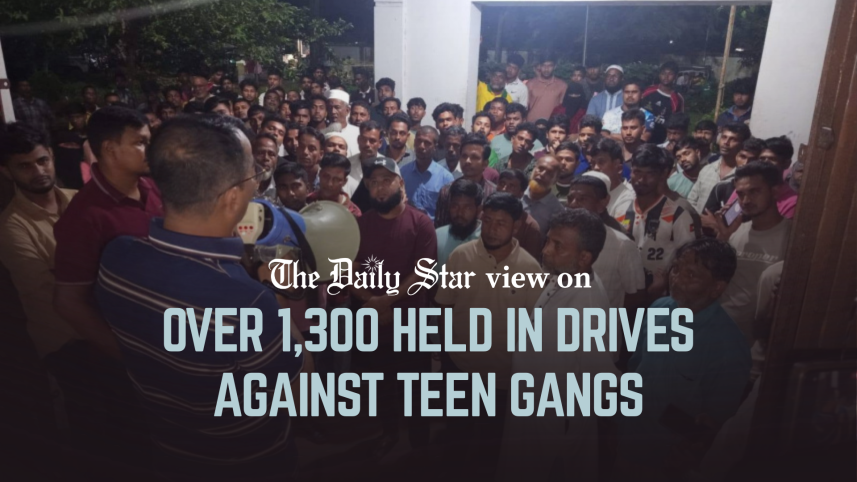
The crackdown on so-called teen gangs by police across four districts signals the government’s seriousness about addressing the growing problem of social disorder. Reports suggest that nearly two-thirds of those detained as alleged members of these groups have been handed over to their guardians, while the rest are being processed for charges in connection with various offences. The special drives, carried out in Cumilla, Chattogram, Chandpur and Noakhali on Monday, followed the tragic death of Ishiat Shahriar Oprotim, who was allegedly killed by a group of teenagers over an iPhone.
In recent years, a number of media outlets have reported a surge in the so-called gang culture among urban teenagers, some of whom have allegedly been involved in crimes ranging from theft, mugging, harassment of women, to more serious offences, including extortion and drug peddling. Clearly, some of these underage, predominantly male youths are delinquent, while others may be exploited by hardened criminal ringleaders for little inducement.

Strong policing against the latter group is necessary and is the right course of action. But the government needs a different strategy for the majority of these teenagers—one that places greater emphasis on social engagement and prevention. Our children need more sporting facilities, reading clubs, debating societies, cultural academies, and other opportunities that can nurture their creativity and provide constructive avenues for their energy.
Furthermore, we must ask ourselves whether treating minor acts of delinquency in the same way as more serious crimes is justifiable. Many children may be drawn by the illusion of glamour, recognition and fame offered by social media platforms, which can encourage seeking attention, experimenting with risky behaviour, and taking unnecessary and avoidable risks. A heavy-handed approach would be disproportionate and potentially counterproductive. Detaining children at police stations, regardless of the duration, can have a profound impact on their psychological well-being and expose them and their families to stigma. It may also alienate young people from law enforcement institutions for years to come.
The already deplorable conditions and severe overcrowding in our three correctional facilities, despite their official designation as Children’s Development Centres, make the accommodation of additional children particularly challenging. The three centres have a combined capacity of around 500 but are reportedly accommodating nearly 1,200 children. Placing children in prisons alongside adult offenders would carry an even greater risk of exposing them to hardened criminals and pushing them further into the world of crime.
Hence, it is imperative that the government devise a cautious and balanced strategy that encourages parents to take greater responsibility for their children while also creating an enabling environment in which young people can prepare for a better future. Stricter policing should focus on established criminal gangs, their ringleaders and those who facilitate or patronise their activities. The media, too, should reassess whether it is appropriate to characterise every form of adolescent delinquency or socialisation as “gang culture”. Careless use of such terminology can inadvertently glamorise gang identity and reinforce the very culture that society is seeking to discourage.
 For all latest news, follow The Daily Star's Google News channel.
Comments