


Bangladesh’s UN moment must become more than a speech

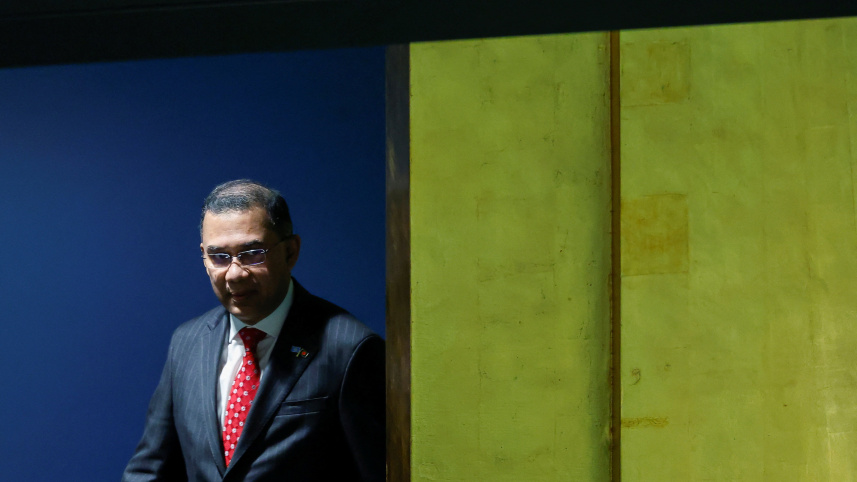
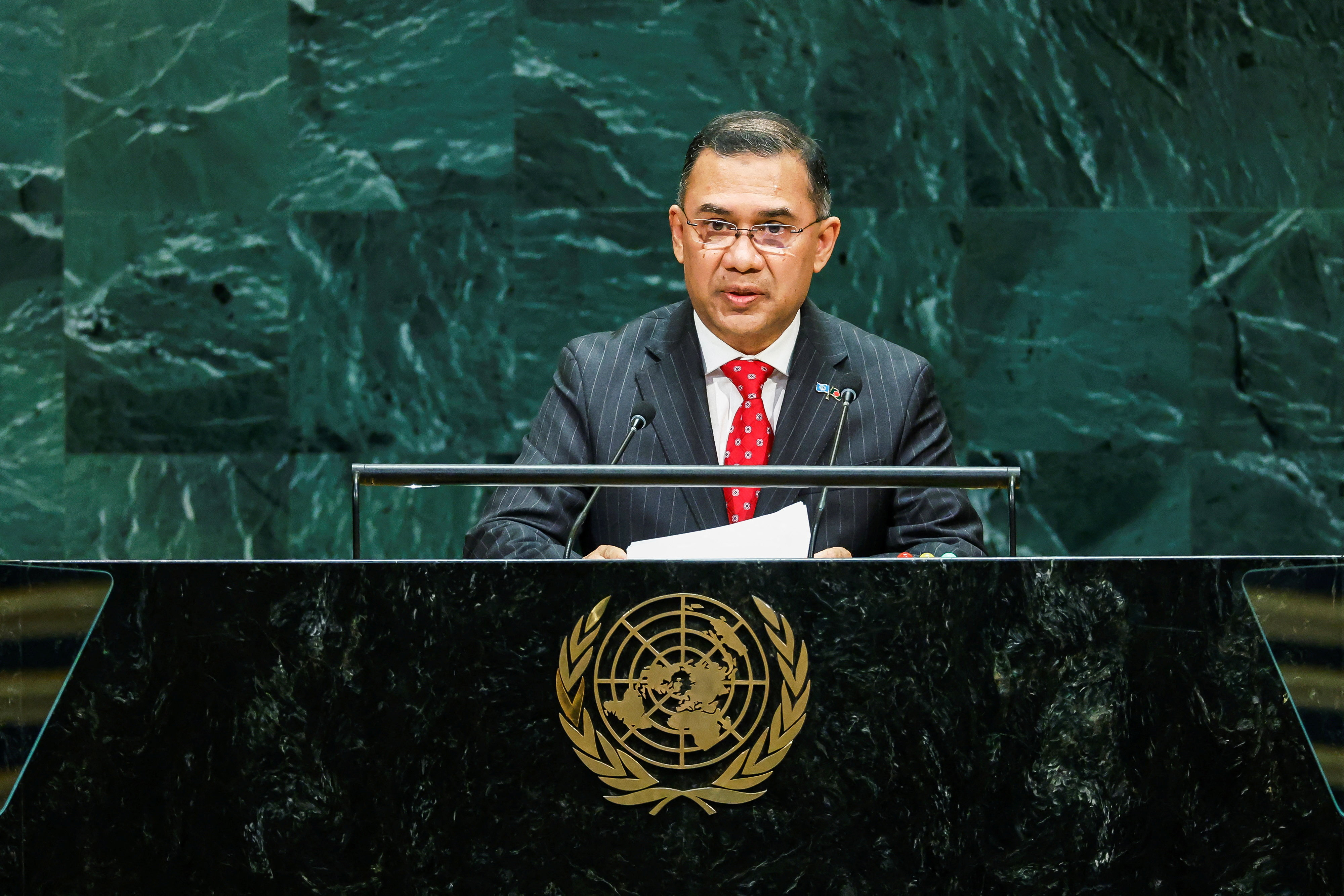
Prime Minister Tarique Rahman gave his first UN General Assembly address recently. With a new political era unfolding for Bangladesh, a challenging transition looms while the nation faces graduation out of the Least Developed Country status that it hopes will be delayed by three years. The nation is also seeking more global influence amid uncertainty due to wars, climate change, and economic fragmentation. His first UNGA address signalled ambitious intent, but the real challenge lies in translating it into tangible actions at home and continued influence internationally.
The speech represented Bangladesh as having much to offer and not just a country looking for assistance. The PM indicated support for diplomacy, peacekeeping, safe migration, climate justice, and equitable distribution of technology. He also articulated a domestic commitment to ensure that expanded political freedoms are matched by increased economic opportunity for all. Indeed, a government cannot persuasively ask the world to respect the dignity of its people without demonstrating that it respects that dignity at home.

Bangladesh's workers and factories are integral to many international supply chains. Because of the country’s location on the Bay of Bengal, it has a vested interest in the future of regional trade, transportation connections, and maritime cooperation. Bangladesh's peacekeepers provide service abroad. The challenges posed by flooding, cyclones, and displacement experienced by Bangladesh have provided the nation with practical experience, which gives it a seat at the table of global discussions on climate resilience. By providing refuge to Rohingyas fleeing persecution in Myanmar, Bangladesh has accepted humanitarian obligations that have implications extending far beyond its borders. These factors constitute the basis for why the world should pay attention to Bangladesh's proposals. At the same time, these obligations create an imperative for those proposals to be specific and persuasive.
Regarding the Rohingya refugee situation, the prime minister appropriately emphasised the need for continued lifesaving assistance and a long-term resolution to the conflict within Myanmar. Bangladesh cannot reasonably be expected to bear this burden indefinitely while the refugees are unable to safely return to Myanmar, even if the world seems to have stopped paying as much attention or is no longer providing adequate aid to the refugees. The PM’s advocacy should result in a sustained diplomatic process: protect humanitarian aid, coordinate with other nations and organisations to create better living conditions for refugees and refugee hosts, and ensure a safe and dignified return.
The prime minster also reiterated Bangladesh's support for Palestine's right to self-determination and the establishment of an independent state. Bangladesh's position carries greater weight when concern is expressed consistently throughout the nation's actions and policies towards protecting civilians, ensuring humanitarian access, upholding international law, and pursuing a viable path towards peace. These should be the guiding principles in responding to similar crises around the globe.
The PM presented a solid argument for equitable climate justice. Developing countries that have not contributed as much to global emissions should not be forced to fund their own adaptations primarily on their own. He combined these requests with Bangladesh's own plans for domestic tree planting, canal restoration, clean energy production, and water management systems. The PM rightly recognised that Bangladesh will need to take action while seeking fairer global assistance in order to adapt to climate change. To this end, the country should publish clear cost estimates, timelines, environmental assessments, and metrics of success associated with each programme. These measures would establish credibility behind ambition. Credibility increases when citizens and development partners can evaluate what has been done alongside what still needs to be done.
The prime minister also discussed employment, skill development, expansion of manufacturing, opportunities for women, and financial support for young entrepreneurs. He called for financing, market access, and technological transfers. There are legitimate concerns behind this, and effective planning will be required to manage the impacts of LDC graduation, regardless of a likely deferral decision in the coming weeks, on trade and development. If Bangladesh develops a credible plan for productivity, export diversification, and investment, it will be best positioned to navigate the transition.
One of the forward-thinking components of the speech was the Bangladesh premier’s observation that today's digital divide could develop into an artificial intelligence divide. Given the large youth population, access to technology is significant. But access by itself is insufficient to produce quality jobs. Access to technology needs to be supplemented with better education, dependable infrastructure, and businesses that can effectively utilise new technology. Rahman's announced goal of increasing educational expenditures to 5 percent of GDP over a five-year period provides a standard against which this vision can be evaluated. What ultimately matters are the yearly budgets and learning outcomes more than the statement itself.
During this period, Rahman also met with leaders from many countries as well as senior UN and development officials. Discussions on investment possibilities and the Rohingya crisis provide potential entry points for dialogue, but they do not constitute agreements or results on their own. Any meaningful discussion should include a subsequent public explanation of the next steps, including who is responsible, specific terms of negotiation, and a timeline for assessing progress.
Of course, an impartial assessment of the PM's address must also acknowledge its most compelling claim: that Bangladesh is making progress in democracy, human rights, good governance, and accountability. These are welcome objectives, but they cannot be proven through speeches and must be evidenced through independent institutions, equal enforcement of laws, protection from political intimidation, and transparency in decision-making regarding public funds. The same criteria apply to promises made regarding an investor friendly economy. Both investors and citizens will require predictable rules, trustworthy banks, and assurance that influence will not affect outcomes.
The prime minister’s UNGA speech will be of sustained value if the government sets forth some quantifiable commitments. These include periodically reporting on its diplomatic initiatives relative to Rohingya refugees; releasing benchmarks regarding climate and water projects; outlining a detailed plan for the looming trade transition; and showing how promises on education, inclusion, and accountability will be fulfilled specifically through budgets and institutional reforms. These activities will enable international partners to collaborate with Bangladesh confidently and also enable citizens to assess the government’s progress on these fronts.
The PM deserves praise for articulating Bangladesh's interests before the UNGA and expressing the nation's desire for contributing to global progress. Bangladesh is equipped with the people, experience, and geopolitical importance to demand meaningful international attention. The speech represents the opening of a door, but walking through it to the other side will require disciplined diplomacy abroad and demonstrable reform at home.
Dr M Kabir Hassan is professor of finance and the Moffett chair in the Department of Economics and Finance at LSU-New Orleans in the US, and a member of the AAOIFI Ethics and Governance Board and chairman of its Education Board.
Views expressed in this article are the author's own.
Follow The Daily Star Opinion on Facebook for the latest opinions, commentaries, and analyses by experts and professionals. To contribute your article or letter to The Daily Star Opinion, see our guidelines for submission.
 For all latest news, follow The Daily Star's Google News channel.
Comments