


Smiles that changed my perspective
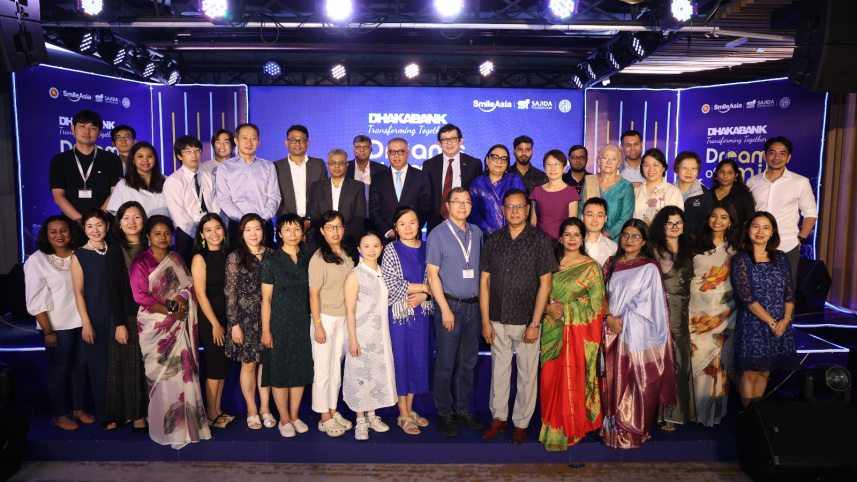
The morning of July 19, 2026, was very different from my regular mornings. Walking through the corridors of the Government Employee Hospital felt like entering a completely new world where the atmosphere was a delicate balance of quiet tension and burgeoning hope.
Doctors and nurses moved with a disciplined urgency, while parents sat in the wards. I met families who had sold their only valuable belongings just to afford the bus fare to Dhaka. I met mothers who had never stepped foot outside their small villages and fathers who had carried their growing children for hours through the heat. Some stories were particularly haunting: a young mother from a remote riverine island whose baby struggled to nurse properly, and an older couple who had waited years, fearing they had missed their window of opportunity. The weight of their expectations was palpable, filling every corner of the waiting room.

I vividly remember the afternoon of July 17, 2026, when my uncle first mentioned the opportunity. He helped arrange for me to volunteer with the Smile Asia medical mission in Dhaka, as he works for Dhaka Bank, which was a CSR partner of the project. I initially felt a wave of trepidation. I never imagined I would be permitted to step into such a profound environment, but my uncle believed in me. He insisted that I should help in small but vital ways: guiding families through the labyrinthine hospital corridors, comforting anxious mothers, and sitting with children as they waited for their life-changing turn. Most of the families who arrived were from underprivileged backgrounds, having travelled immense distances with little more than the clothes on their backs and the hope that their child's face could finally be made whole.
Later, after the project was done, my uncle told me that he had wanted me to understand the dynamics of life and to understand the responsibilities that come with whatever privilege we are born with, for others who are less fortunate.
As the youngest among the entire cohort of volunteers, being there to welcome families, to hold a small trembling hand, or to offer a reassuring smile when words failed, felt like the most significant undertaking of my life. I realised the real meaning of life in contrast to the capitalistic society that we live in.
Smile Asia exists to provide free surgeries for children born with cleft lip, cleft palate, and other facial conditions. A team of 38 professionals, including plastic surgeons, anaesthesiologists, nurses, and therapists, came from eight different countries with a common mission: to bring smiles to underprivileged children of Bangladesh who would otherwise remain with uncorrected cleft conditions. During this, their eighth mission to Bangladesh, they forged a powerful partnership with the SAJIDA Foundation and Dhaka Bank, bolstered by the full support of the Government Employee Hospital under the Ministry of Health. This was not merely a visiting team; it was a collaborative ecosystem of care.
The most difficult aspect of the experience was assisting the medical team in breaking the news to families whose babies could not undergo surgery that week. Watching hope drain from a parent's face in those moments was heartbreaking. We had to explain, with the help of translators, that they would have to wait or seek further medical stabilisation first. Those moments taught me that even when we cannot provide an immediate cure, the simple act of listening, offering a seat, and treating people with genuine dignity still matters immensely. It was a lesson in the quieter side of humanitarian work — the side that involves holding space for someone else's grief and disappointment.
Amidst the intensity, there were moments of incredible light, often sparked by the foreign medical team. I was particularly inspired by Dr Mei Lin, a kind-hearted plastic surgeon from Singapore who seemed to possess an endless supply of patience and a pocket full of colourful stickers. On the second day, she noticed me looking slightly overwhelmed as a large group of families arrived at once. She walked over, gave me a quick pat on the shoulder, and joked, "Don't worry, Aiza. If you can survive being our youngest volunteer, you can survive anything." Her levity was a gift. Later that afternoon, she invited me to stand at the edge of the post-operative ward while she performed her rounds. She explained, in simple and moving terms, how a repaired cleft allows a child to eat without the constant danger of choking and to speak without the fear of being misunderstood. When a little girl began to wake from anaesthesia and immediately reached for her mother's hand, Dr Lin's eyes shone with quiet brilliance. She whispered, "This, Aiza, is why we fly across the world."
For those who did receive surgery, the transformation was nothing short of miraculous. A cleft repair is not merely a cosmetic fix; it is a restoration of a child's fundamental right to a normal life. It changes the way they eat, the way they sound, and the way the world looks at them. I first grasped the long-term impact through Arif bhai, a Dhaka Bank employee who oversaw the volunteers and had served on multiple similar missions. He told me about Rafi, a four-year-old boy from a previous mission who had been severely malnourished because he could only take milk drop by drop. Rafi's mother had kept him indoors for years to protect him from the cruel stares of neighbours. During a recent follow-up, they found Rafi laughing and playing in the village dirt, eating soft rice and fruit with ease. His parents were no longer hiding him. They were talking about enrolling him in school and dreaming of a future they had once abandoned.
As the mission drew to a close, I saw those same ripples of hope beginning to form in the families around me. In the post-operative area, the atmosphere softened as children woke up and parents saw the results for the first time. A little girl who had been too shy to even look up began whispering her first clear words to her mother. A boy whose parents had been told his condition was a curse finally looked at himself in the mirror and then around the room with a sense of wonder, no longer hiding his face behind his hands.
I left the hospital carrying those faces and stories with me. Being the youngest volunteer in that ward, standing beside children and families who needed nothing more than presence and hope, has altered the way I see the world in ways I cannot fully articulate yet.
The author is a grade 10 student of Australian International School, Dhaka, Bangladesh.
 For all latest news, follow The Daily Star's Google News channel.
Comments