The bureaucrats and intellectuals who shaped the Mughal Empire

Some collaborative research and publication projects are truly amazing and long-lasting. The recent book by Muzaffar Alam (University of Chicago) and Sanjay Subrahmanyam (University of California, Los Angeles), Mirrors of Empire, once again illustrates that it is possible for two scholars to work together fruitfully for thirty years or more. In general, such collaborations appear to face difficulties, survive for some time, show signs of compromise or a domination/subordination binary, and end with partners dumping each other for greener pastures – abandoning the willingness and endeavour to work together productively.
These problems are also to be seen in normal relations between two people, such as acrimony between bad-tempered married couples, doubtful romantic relationships, mistrust among colleagues who do not respect each other, and ‘distinguished’ teachers and ‘ambitious’ students trying to demean and pull each other down. In sum, people can be mean, hierarchical, unpredictable and impatient, and lack the ability to value and respect partners, friends and colleagues. By contrast, the ethical virtues of respect, trust, tolerance, grace and acceptance of another person’s style and temperament can together help sustain a lasting association, such as in intelligently building and shaping each other’s careers for mutual benefit while not appearing detrimental to others as well.
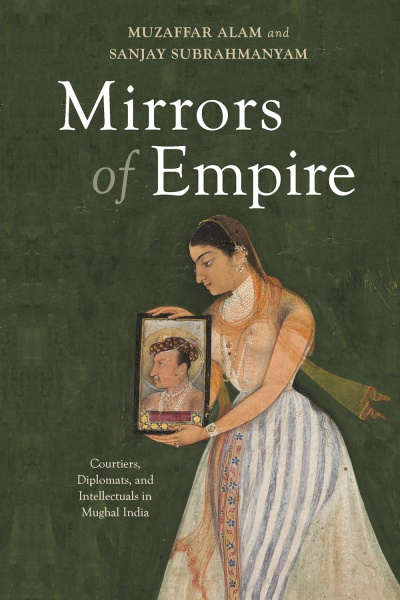
To be selfish and ambitiously build one’s life and career, following one’s own understanding of where the ethical line lies, is a perfectly legitimate enterprise. This is relevant both because the collaboration between Alam and Subrahmanyam has lasted for so long, to the surprise of many fellow historians, and because the subject matter of their latest book is also what are called ego-histories or ego-documents – memoirs of a number of Mughal bureaucrats and intellectuals. These include studies of voluminous writings – autobiographical reflections, self-narratives, memoirs, etc. – by such important and well-known figures as Abu’l Faiz Faizi, Asad Beg Qazwini, Abdul Latif, Mirza Nathan, Bhimsen Saksena and Anand Ram Mukhlis. The high Mughal ‘ego’ literature – the autobiographical narratives of the founder of the Mughal Empire, Zahiruddin Muhammad Babur (ruled 1526–1530), and Nooruddin Muhammad Jahangir (ruled 1605–1627) – is well known. This new book by Alam and Subrahmanyam discusses the lives of people who built their careers after coming from outside the Mughal imperial family or dynasty.
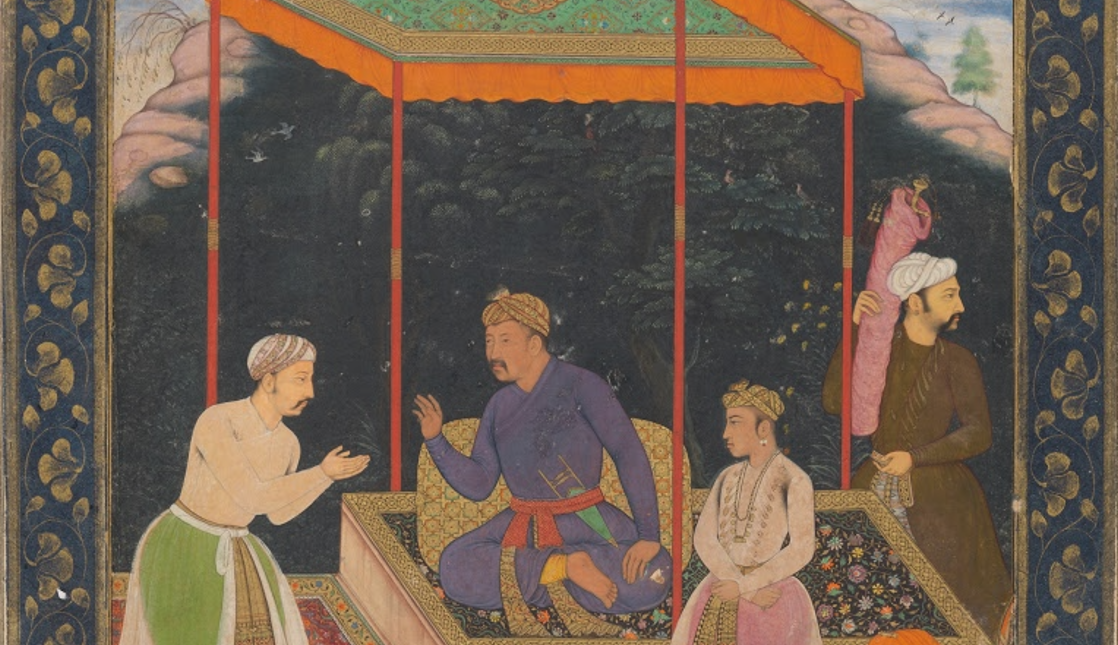
Faizi and his family, including his father, Shaikh Mubarak Nagauri, and brother, Abu’l Fazl, had survived attacks from conservative Sunni-Hanafi theologians (ulama) over accusations of being heretical-millenarian Mahdawis before entering the court of the Mughal emperor Jalaluddin Muhammad Akbar (ruled 1556–1605). Whereas Abu’l Fazl flourished as a close intellectual friend of the emperor, articulating the official ideology in his voluminous Akbarnama and Ain-i-Akbari, Faizi emerged as an eminent poet laureate. The poet and historian Asad Beg, from Qazwin in Iran, served as a close confidant of Abu’l Fazl before entering Akbar’s court, and the emperor sent him to the Deccan as an envoy. Born in Ahmedabad, Gujarat, Abdul Latif flourished as a philologist, letter writer and traveller at the margins of the Mughal Empire, working for governors in Kabul, Orissa and Bengal, before entering the court of the emperor Shahabuddin Muhammad Shah Jahan (ruled 1628–1658), with a high rank in the Mughal bureaucracy.
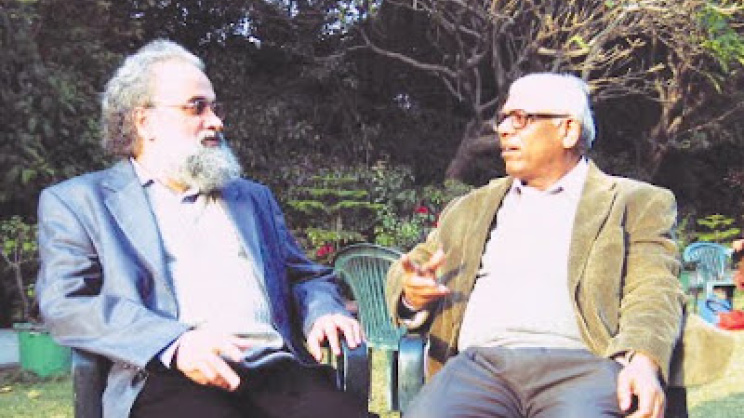
Belonging to an Iranian immigrant family, Mirza Nathan ‘Ghaibi’ (originally known as Alauddin Isfahani), who served as administrator of several districts during his long career in Bengal, is famous for his Baharistan-i-Ghaibi, a text particularly useful for understanding Mughal penetration deep into eastern Bengal, with Jahangirnagar-Dhaka emerging as an administrative centre in the early seventeenth century.
Born into a Vaishnava Hindu Kayastha family based in Burhanpur, central India, Bhimsen’s career in Mughal service coincided with the reign of Emperor Muhiuddin Aurangzeb Alamgir (ruled 1658–1707), and his autobiographical text, Nuskha-i-Dilkusha, therefore, serves as an important sub-imperial account celebrating his rule. Bhimsen mourned Aurangzeb’s death (in 1707) as a major tragedy – the end of a long period of just rule and the beginning of an epoch of anarchy – and yet criticised the emperor’s notorious Deccan campaign as a morally bankrupt fallacy with disastrous consequences. The period after Aurangzeb’s reign saw the Mughal centre flourishing intellectually, even though the empire itself was dismembering into large successor states.
Anand Ram Mukhlis, a wealthy Punjabi-Khatri man of Delhi, belonged to a large circle of poets, writers, historians and other men of letters. His voluminous writings included works of lexicography (Mira’at-ul-Istalah), a collection of poetical compositions (in two diwans), and a historical account (Bada’i Waqa’i-yi Muhammad Shahi), which is valuable for the history of the reign of Emperor Muhammad Shah (ruled 1719–1748) and the Iranian ruler Nadir Shah’s attack on Delhi (1739).
Alam and Subrahmanyam offer many details of considerable historical significance in long chapters and sections based on the memoirs and other writings, including histories and travel accounts, of these scholars, envoys and bureaucrats in Mughal service. Each of them contributed in different ways to strengthening the intellectual foundations and credentials of the Mughal Empire. Further, reading about important historical figures reflecting on their lives provides new insights and perspectives, which are often not available from authoritative official documents or chronicles. Official data are generally fudged; they tell people only what those in authority want them to know, as the famous historian EH Carr warned. Life histories of people – important or otherwise – help us understand how they shaped their lives or faced the world against all odds, as well as several other dimensions, such as how to rise above petty jealousies to excel as role models for others to follow – as well as what to say and how to say it.
Historians are considered to be among the best of people. They are expected to rise and shine above the personal and political biases – group politics or hopeless ideologies – of their time in order to sound credible when they write and speak.
Historians are considered to be among the best of people. They are expected to rise and shine above the personal and political biases – group politics or hopeless ideologies – of their time in order to sound credible when they write and speak. There are enough insights from the life histories of people in the past for us to learn from and style ourselves accordingly. Collaborative research also works wonders, as in this case, where the two scholars fruitfully bring together their awe-inspiring linguistic abilities and intellectual credentials.
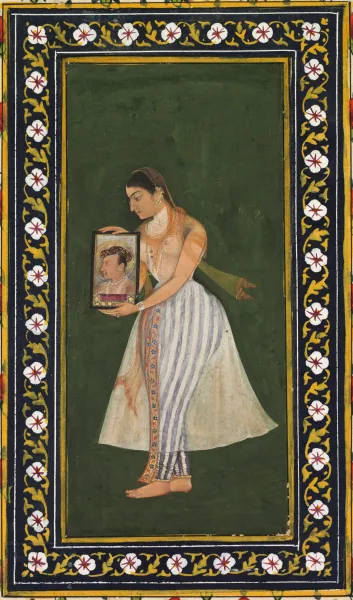
As Francis Robinson has noted in his endorsement of the book, Alam brings to the partnership expertise in Islamic textual traditions in Urdu, Persian and Arabic; Subrahmanyam adds skills in excavating early modern Dutch, French and Portuguese archives. They have previously jointly published Writing the Mughal World: Studies in Political Culture (2011) and Indo-Persian Travels in the Age of Discoveries, 1400–1800 (2007). Earlier, they began their collaboration as co-editors of a large volume of essays, The Mughal State, 1526–1750 (1998). Together, they question old ways of seeing things and discover new ones – achieving the unusual feat of sustained joint authorship.
(Based on Muzaffar Alam and Sanjay Subrahmanyam, Mirrors of Empire: Courtiers, Diplomats, and Intellectuals in Mughal India. Ranikhet: Permanent Black, 2025.)
Raziuddin Aquil is Professor of History at the University of Delhi.
Send your articles for Slow Reads to slowreads@thedailystar.net. Check out our submission guidelines for details.
Paradise lost and found: Rediscovering early modern Bengal
Unbound Mother: The making and remaking of Kaali in Bengal
Do great leaders make history, or does history make them?
Poison and cremation: A forensic history of colonial Bengal
Partition, Bor Porong and the Chakmas’ unfinished struggle for belonging
The young radicals who challenged 19th-century Bengal

More men are cooking. But is patriarchy leaving the kitchen?

Everyday secularism and the Bangladesh we rarely talk about
Reading Sarat Chandra at 150, with empathy