


Argentina feels like home, but Kiki Ramos still wonders where he came from
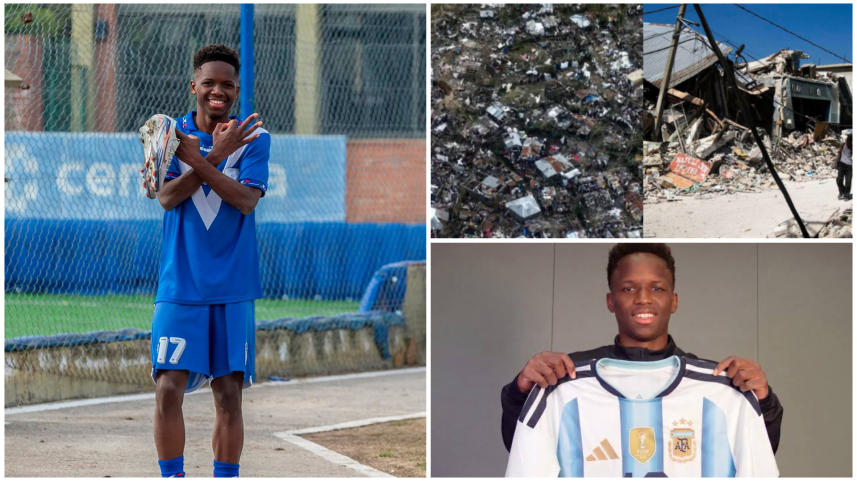
Kiki Ramos was nine months old when the earth shook beneath Port-au-Prince. He was too young to remember the noise, the fear or the destruction that followed. He does not remember the orphanage where he spent his early months, the family he was born into or why he was left there.
What he knows about that part of his life has come from the people who raised him. He survived the earthquake.

Soon afterwards, Ramos was adopted by Francisco Ramos and Astrid Pozzi and brought to Buenos Aires, where everything he now thinks of as home, began.
His memories are of Villa Devoto, of his mother taking him and his siblings to the local square to play, and of the concrete courts where he learned fútbol de baby. He speaks with the unmistakable rhythm of Buenos Aires and has grown up immersed in the football culture of a city where the game is as much part of everyday life as the streets themselves.
Yet there is a part of his own story that remains beyond his reach.
“I know that I had a big family over there. We don’t really know why they had to leave me at the orphanage,” Ramos told The Athletic.
“Apart from the fact that I survived the earthquake there, I don’t remember anything.”
Apart from the fact that I survived the earthquake there, I don’t remember anything.
There is no bitterness when he talks about Haiti, and no sense that he feels incomplete because he cannot remember it. He is happy with the life he has in Argentina, surrounded by the family that adopted him and the siblings with whom he grew up.
But there is curiosity, too.
“I really like my life here, so I am not thinking about it,” he said.
“But in the future I would like to understand where I came from.”
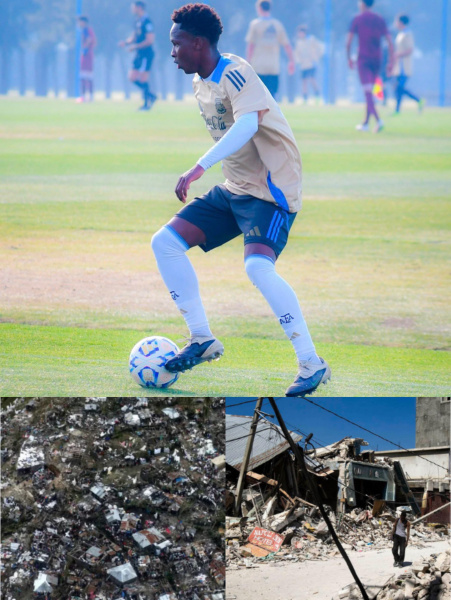
For now, his family is firmly rooted in Buenos Aires. Ramos grew up alongside three other children adopted from Haiti, and although they are not related by blood, he describes them simply as “siblings by heart, not by blood”.
Ramos grew up alongside three other children adopted from Haiti, and although they are not related by blood, he describes them simply as “siblings by heart, not by blood”.
His younger brother Maki, 14, plays rugby. Judesson, 17, sails. His sister Djounay, 19, is studying. They joke around, laugh and have grown up sharing the same home and the same childhood memories.
Football became part of that family story almost by accident.
Ramos' mother used to take the children to the local square to play, and he later joined Club Parque, the famous grassroots club that has produced Carlos Tevez, Juan Roman Riquelme and Alexis Mac Allister. A neighbour who supported Velez Sarsfield eventually spotted him playing in the street and recommended him for a trial.
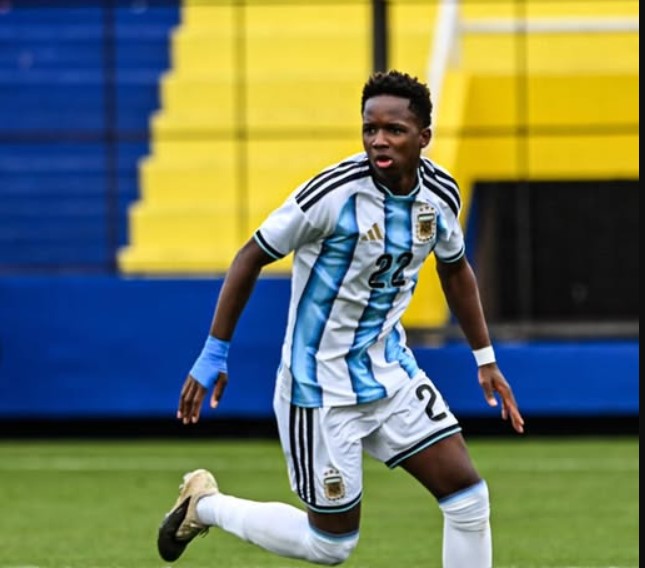
He has been at Velez ever since.
His progress was not always straightforward. Injuries slowed him down, but a change in mentality helped him kick on, and the goals followed. This season he scored 18 times in 22 appearances for Velez's Under-17 side, establishing himself as one of the club's brightest young attackers.
 For all latest news, follow The Daily Star's Google News channel.
 Then came Argentina.
Ramos was sitting in an online maths class when his phone buzzed. His fitness coach had sent him the call-up message, although Ramos initially misread it and could not understand why he was being contacted.
He read it again and realised what it meant.
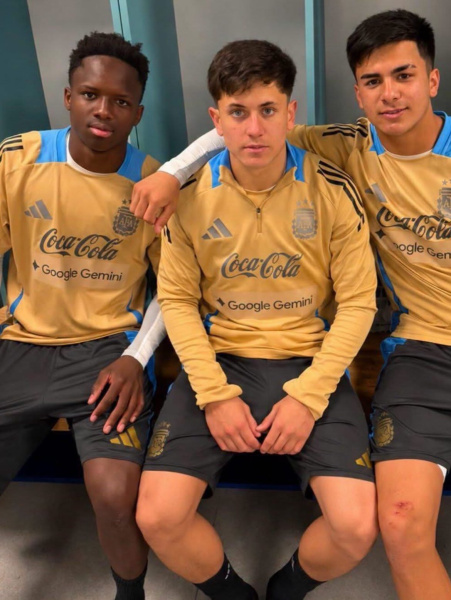
“I ran straight to tell my parents,” he says. “It was such a beautiful moment and one that I really did not expect.”
His life has changed dramatically since then. His Instagram following has risen from around 10,000 to more than 422,000, Nike has signed him as a sponsor and strangers now recognise him in the street. In the middle of it all, Velez have handed him his first professional contract.
He is still 17 and still finishing secondary school.
That contrast is part of what makes Ramos' rise so fascinating. To the outside world, he is beginning to look like a serious prospect for Argentina's future. Inside his own life, he remains a teenager balancing school, football, family and the sudden attention that comes with both.
There is also the possibility of history.
If Ramos eventually reaches Argentina's senior team, he could become only the fourth Black player to represent the country and the first since goalkeeper Héctor Baley in the early 1980s.
If Ramos eventually reaches Argentina's senior team, he could become only the fourth Black player to represent the country and the first since goalkeeper Héctor Baley in the early 1980s.
That has inevitably brought greater attention to his background. Ramos has seen both admiration and negative comments online, but he has little interest in allowing either to determine how he sees himself.
“It has never been important to me how others see me,” he noted. “More than anything, I care about the opinions of my friends and family, the people I love.”
His focus remains football. He wants to keep scoring, earn greater confidence with Argentina's youth teams and make the squad for the Under-17 World Cup in Qatar. His pace is his greatest weapon, while his finishing has improved significantly over the past year.
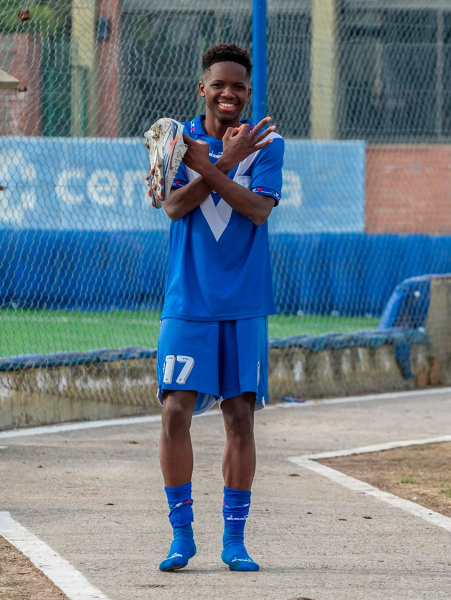
Beyond that, the dream is obvious: to one day play for Argentina's senior team.
Whether that happens will depend on the football. But Ramos has already become an intriguing figure in a country that has embraced him as one of its own.
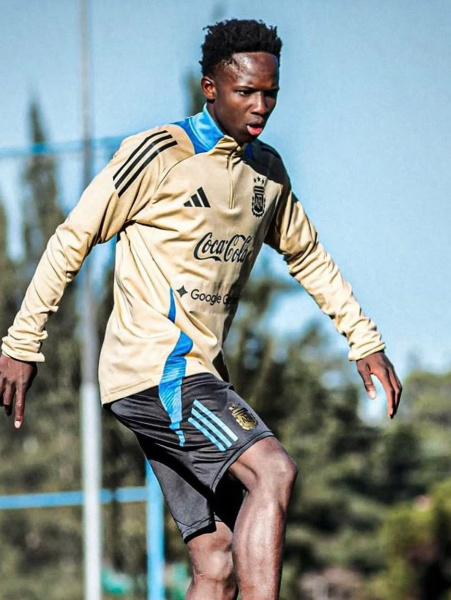
There is something poignant about that. He was born in a place he cannot remember, survived a disaster he was too young to understand and was brought to a country that became home before he was old enough to question what home meant.
He was born in a place he cannot remember, survived a disaster he was too young to understand and was brought to a country that became home before he was old enough to question what home meant.
One day, he says, he would like to understand Haiti better. Perhaps he will return. Perhaps he will look for the parts of his story that were lost before he could remember them.
For now, though, his life is in Buenos Aires, with the family that raised him and the club that has helped turn a boy playing football in a neighbourhood square into one of Argentina's most promising young players.
Comments