The history of caste is not what we think

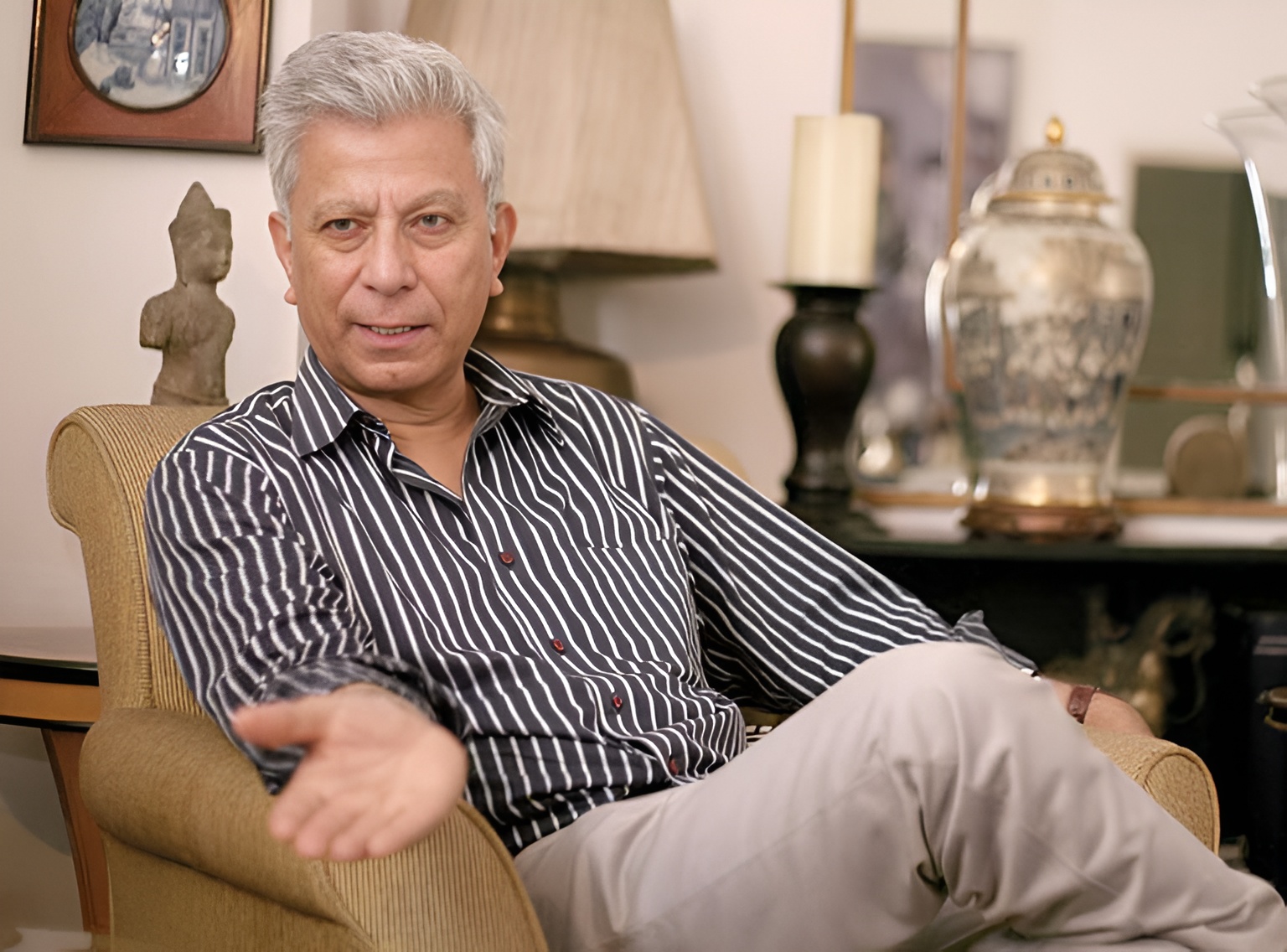
Distinguished Indian sociologist and public intellectual Dipankar Gupta, formerly a professor at Jawaharlal Nehru University, speaks to The Daily Star about the historical evolution of caste, the relationship between caste hierarchies and identities, and the transformation of caste politics in contemporary society.
The Daily Star (TDS): You have said that throughout history, there have been caste revolts as well as processes of caste mobility. How do you understand caste, perhaps the most significant marker of Indian society? There are different traditions of thinking about caste. One is represented by political thinkers such as Gandhi and Ambedkar, whose ideas and interventions significantly shaped both colonial and postcolonial policies and debates on caste. Another tradition is represented by social scientists such as N. K. Bose, G. S. Ghurye, M. N. Srinivas and André Béteille. Which of these perspectives do you find most useful for understanding caste as a social institution?
Dipankar Gupta (DG): Doubtlessly, caste is a very important feature of Indian society. In earlier times, there were caste revolts, but those occurred at intervals of several decades, sometimes even centuries, when one caste toppled another and would "wade through slaughter to a throne". It was through such "regime changes" that caste mobility took place in India, and that is the differentia specifica that probably separates India from other cultures. Pastoral communities, in particular, demonstrated this aspect rather dramatically when they elevated their caste position by establishing kingdoms of their own. Now, with democracy, caste conflict has become an everyday affair.
I was never quite as impressed with Mahatma Gandhi on this subject as I was with Dr Ambedkar. There can be no doubt that Gandhi was an incredible figure who stands head and shoulders above many leaders in history. Yet, on the subject of caste, his observations were those of a benevolent altruist rather than an angry subaltern. Though he fought against untouchability, he also saw certain positive features of the caste system. To my mind, Gandhi never fully resolved this contradiction.
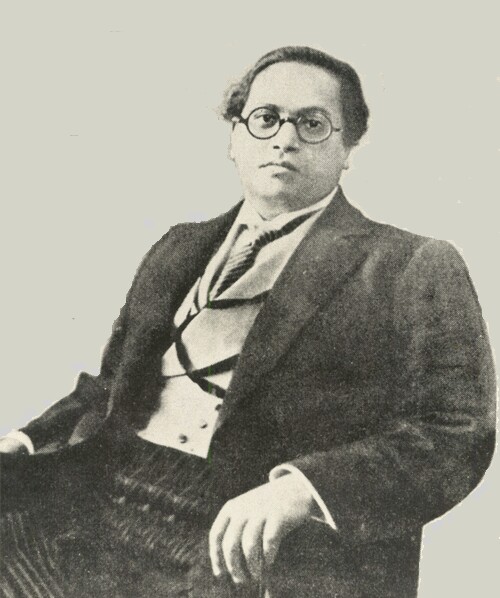
Ambedkar was much more astute on this subject, and his clinically precise condemnation of India's villages contrasts with Gandhi's romantic and somewhat generous notions of rural India. For me, Ambedkar was certainly more on the button, but I reserve most of my kudos for him for his contributions during the period when he was Chair of the Drafting Committee of the Indian Constitution. It was there that Ambedkar fully developed his views on citizenship, which are yet to be matched, in terms of both lucidity and profundity, anywhere in the world. That is one of the reasons why we have a Constitution that has stood the test of time. There have been issues, but that does not undermine the positive impact our Constitution has had on our society.
When I look at caste, I find myself in a position somewhat like that of the boy who stood on the burning deck. I was rather alone because I refused to believe that members of any community would ever subscribe to the view that they were intrinsically debased and deserved to be placed at the bottom. This has been the prevailing view of caste among scholars for decades. Put simply, the argument is that so-called lower-caste people participate, to quote Michael Moffat, "in their own subjugation", which is why they fully endorse their lowly position. It is on account of this interpretation of how Indians and Hindus see themselves that caste appears so unique. Nowhere else in the world would a huge section of the downtrodden tell themselves that they deserve to be kicked around. Neither did the poor, formerly untouchable castes in India, but colonial thinking kept that reality out of focus.
It is this conception of caste that I found repulsive in the extreme. Yet, so powerful is the textual tradition, sealed and packaged by Western Indologists, that our scholars, too, fell prey to this view. This angle of vision makes Indians out to be a rather abnormal population, exotic in the wrong kind of way. This is where my study of the origin tales of different castes made a significant contribution to my thinking. I was able to show that Hindus, too, are normal people, for there is no caste, or jati, whose origin tale does not recall a glorious past. If they are poor and degraded today, it is because of deceit, chicanery, a lost war resulting from betrayal or, as sometimes happens, an ancestor who unwittingly angered a god. That being said, in the fullness of time, these injustices would be corrected, and the world would then know how grand and elevated their caste status really is.
Funnily enough, for all this time, the origin tales of castes escaped serious attention. Instead, scholars fixated on the Brahmanical fiction of how different castes emerged from the body of the primeval being. The books we read in college were all awash with sermons from Brahmanical texts. That is the reason why Professor Ghurye's interpretation of caste appeared to me to be too conventional. Later, when I read Louis Dumont, I was filled with indignation, for I found him not just far too textual but, what is more, he gave Indians a strange, unfathomable character through some heavy-duty theory that seemingly impressed a large number of scholars. Others may be there, but not their own caste. The British theorised wrongly, but the origin tales are a very valuable resource.
TDS: What is your assessment of the understanding of caste developed by European thinkers from the colonial period onwards, including British administrators and ethnographers such as Hunter, Risley and Enthoven, as well as major social theorists such as Max Weber and Louis Dumont? How do you evaluate their interpretations of caste and their influence on subsequent scholarship? At the same time, what explains the emergence of alternative origin narratives among lower-caste communities, who have often challenged their historically subordinate status by constructing new historical and mythological genealogies? What are the social and political implications of these efforts to reinterpret the past and redefine caste identity?
DG: My response to your earlier question will flow into my response to this one. If by European thinkers one is referring to those like Max Weber, then, of course, their conception of caste was highly fantasised, for they drew their information almost entirely from traditional texts and ancient or medieval travelogues. It is for this reason that one might forgive Max Weber, as his knowledge of India was really very limited. Yet, he needed to build on the otherworldly Indian mystique, for that helped him shore up his position on the Calvinist ethic and the spirit of capitalism. So, a caricatured India was useful to him in that context.
Marx had no use for Indian texts and traditions and derided them wholeheartedly, yet he, too, drew from secondary sources. This is evident in his contributions on India to the New-York Daily Tribune. Marx, of course, did not have a first-hand understanding of India or the Hindu religion. His position on this subject was coloured by his reading of Hegel, who condemned India as a static society, outside history, and even a "fairy region", given to worshipping an abstract pantheistic ideal. One may recall, at this point, Hegel's tract on the Bhagavad Gita, which he believed encouraged Hindus to forget the individual self in seeking the absolute, or Brahma. So, one way or another, by labelling Indian culture as otherworldly and mystical, these thinkers adopted a dismissive attitude towards Hindu India. This is very unfortunate. It was quite apparent that their positions on this subject only exaggerated the exotic aspects of Hindu thought and philosophy. Sadly, even renowned and much-respected scholars like Dr S. Radhakrishnan promoted this point of view.
I would place many of the British administrators in a slightly different bracket because theirs was not to reason why; theirs was but to classify. It was when they attempted to reason why that these colonial authorities went terribly wrong, as they came up with unfounded theories on caste and race. However, the accounts that colonial officials like Hunter, Risley and Enthoven, or even James Tod, left behind are quite invaluable. They recorded, in great detail, the origin tales of scores of castes, as well as their customs and rituals. I chanced upon these accounts quite by accident, but when I did, all my doubts about the caste order disappeared in one fell swoop. I now knew exactly why the received literature on caste was wrong.
Unfortunately, these texts by Risley and others are not prescribed in our university curricula. Had they been, they would have openly defied the view that the caste order and its ideology are uniform across the Hindu population. They would also have challenged the common presumption that the prescriptive ideals expressed in the Vedas, the Upanishads or the Dharmashastras are widely known among Hindus and observed in everyday practice. In no other society are sacerdotal texts the basis for everyday behaviour. How many Christians even know of the Nicene Creed? Or the Nine Covenants in the Bible? The same holds true for every religion, including Islam and Sikhism. Those orthodoxies are reserved for religious occasions, but life, real life, has other considerations to deal with, and these are more pressing. If this is true elsewhere, it should apply to India too, and it does. Once we put aside Western blinkers, we find that in India, too, orthodoxy does not rule as inflexibly as many elitist and European scholars have made it out to be. Indians are as normal as individuals in other parts of the world.
For example, the Purusha Sukta legend, which famously claims that the four castes emerged from the body of the primeval being, is unknown to many, and it does not appear that they care. The fact is that each caste has its own origin tale, and in every one of them, I repeat, in every one of them, the beginning is a glorious one. As these tales were transmitted orally, they did not receive the attention they deserved, which is why one must acknowledge the British officers who recorded these accounts for posterity.
For example, the Purusha Sukta legend, which famously claims that the four castes emerged from the body of the primeval being, is unknown to many, and it does not appear that they care. The fact is that each caste has its own origin tale, and in every one of them, I repeat, in every one of them, the beginning is a glorious one. As these tales were transmitted orally, they did not receive the attention they deserved, which is why one must acknowledge the British officers who recorded these accounts for posterity. Nowhere does any caste say that its members are made of base or impure substances. This does not mean that they are against hierarchical ordering; rather, they object to being placed low in the hierarchy. Others may occupy those positions, but not members of their own caste.
TDS: How do you assess the historical trajectory of caste in India? Traditionally, caste operated through marriage, dining practices, occupational specialisation and institutions such as the jajmani system in village society. It was often assumed that although caste might not disappear completely, it would gradually weaken through urbanisation, social mobility and the decline of untouchability. Yet, in practice, caste has often adapted to urban life, while inequalities persist, lower-caste people continue to face humiliation, and new forms of class formation frequently reproduce older caste advantages and hierarchies. How do you explain this persistence and transformation of caste in contemporary India?
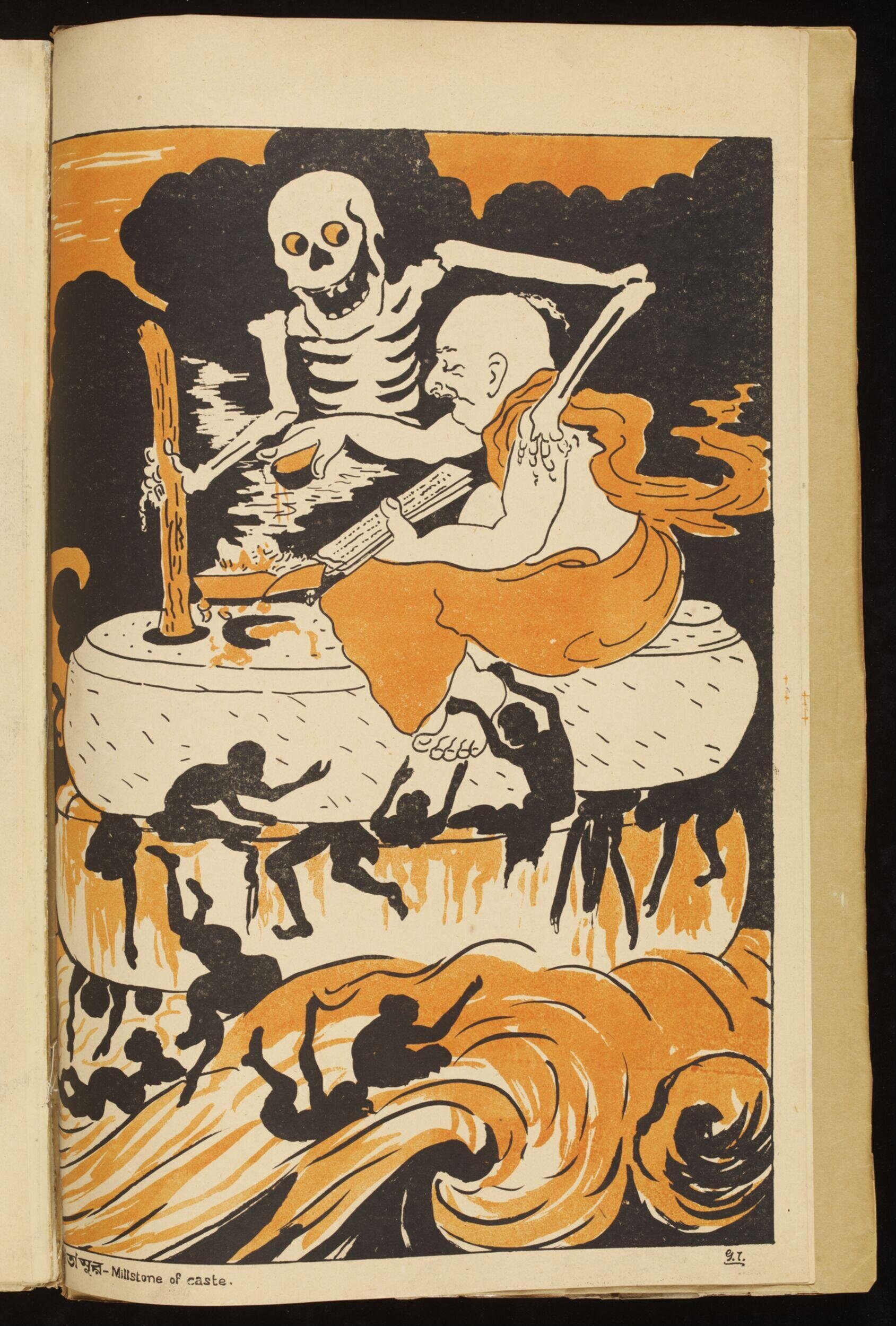
DG: The caste system, as a system, worked best in a closed village economy where there was no doubt within the local community as to which caste was at the top. That position was invariably occupied by the caste that had the most land and power. This caste determined the hierarchy of castes at the local level, though the intermediate layers were often blurred and indistinct. Brahmins were very rarely placed at the top of the caste hierarchy when it came to how the village actually operated.
The Brahmin caste, too, was internally graded. Those who served the powerful landed castes were considered superior to those who served as temple priests, and here, too, the officiant in the sanctum sanctorum was superior to the priest who performed other duties within the sacred precincts. The Brahmins who served lower castes were obviously further down the scale, with funerary specialists occupying the bottom rung. This group is openly despised by many non-Brahmin castes as well. Most importantly, the Brahmin at the top of this scale is not the ritual specialist but a person who owns enough land and wealth, often accompanied by a degree of pelf, and who refuses to perform any ritual functions.
Paradoxically, the pujari, or ritual specialist, occupies a lower status among Brahmins than a person who owns land and disdains performing any ritual ceremonies for others. This is primarily because the Brahmin is a service caste in most villages. Thanjavur district in Tamil Nadu was one of the rare exceptions to this rule until the 1970s. When a Brahmin possesses wealth, he refuses to perform these functions, nor will he allow his children to marry into a family that performs rituals. There are several such powerful landed Brahmin communities that will not countenance any suggestion of serving as priests. The two most well-known examples are the Anavils of Gujarat and the Jhas of Bihar. They would openly scoff at the very idea of being ritual specialists. Once again, this shows how normal Hindus are. When there is a choice between rituals and secular advantage, the latter always wins. Stands to reason, doesn't it?
Now that the closed village system has collapsed, a process hastened by the abolition of landlordism, or the zamindari system, in India, many of the traditionally powerful castes have lost most of their landed property through the subdivision of holdings. Today, it would be difficult to find anybody in rural India who owns more than 15 acres of land. Indeed, there are still a handful of large farmers, but they are few and far between. As these formerly powerful castes have lost their economic capacity to employ others and act as patrons, the previously subjugated castes find it easier to defy their orders and even ridicule them.
Additionally, the fact that about 85% of landholdings are below five acres and about 66% are below two acres shows that the village economy is not really as rural as it used to be. Experts estimate that as much as 63% of rural net domestic product today comes from non-agricultural activities. Why is this fact not highlighted enough? Consequently, the old system of payment for services in kind to castes such as barbers, scavengers, washermen and agricultural labourers has become very rare. Today, transactions are largely conducted in cash, on terms agreed upon between landholders and service providers.
Additionally, the fact that about 85% of landholdings are below five acres and about 66% are below two acres shows that the village economy is not really as rural as it used to be. Experts estimate that as much as 63% of rural net domestic product today comes from non-agricultural activities. Why is this fact not highlighted enough? Consequently, the old system of payment for services in kind to castes such as barbers, scavengers, washermen and agricultural labourers has become very rare. Today, transactions are largely conducted in cash, on terms agreed upon between landholders and service providers. This is a very major development, but one that many scholars do not give adequate attention to. India has progressed, and Indians are not fanatically mystical and otherworldly, but normal people with normal ambitions.
That is still not the full story. All castes, as we said earlier, have their own origin tales and justifications for their past glory, but in the past, they would never express these openly for fear of being ridiculed or even physically assaulted by the superior castes. Similar things happened in medieval Europe as well, when serfs tried to stand up to feudal lords. There is nothing strange about this. As the underclass feared retaliation from their superiors, they kept their sentiments under wraps and expressed them only within the close fireside circles of kin, clan and caste. Once the village economy came unstuck and the caste system, as a system, began to creak and crack, the hierarchical order that had previously been enforced no longer mattered nearly as much.
Now that the closed village economy is under severe strain, the subordinate castes can come out into the open, proudly proclaim who they believe they are and boldly make their origin tales known. The peasant castes were the first to do so, but now other castes, too, have picked up the tempo. It is this resurgence of "caste identity" that has led to the emergence of caste politics in India. Thus, while the "caste system" has nearly collapsed, caste identities across the board have come to life. It is the compressed energy within these identities that propels caste politics. It is precisely because caste as a system is struggling to stay alive that caste is now growing in strength in the form of distinct identities.
Caste is not dead, but it has undergone a dramatic transformation. Therefore, when the cry goes up that caste is still thriving, we must qualify that claim and explicitly recognise that the caste of today is no longer the caste of yore. The system has atrophied, and in its place, identities have emerged. Indian culture is neither static nor fantastic!
The popular assumption is that most constituencies have a single dominant caste, or at most two equally dominant castes, so political alignments take place spontaneously. This is not at all true. Even fully committed casteists, who are rather rare, may have to vote for a candidate outside their own caste because there are so many castes concentrated within a single constituency. This brings about unpredictable voting patterns on the ground, making election predictions based on caste loyalties alone highly suspect.
It is on account of the emergence of caste identities that caste politics is so ubiquitous today. However, be warned: when analysing elections, one must recognise that most constituencies have at least five castes of roughly equal strength. As there are nearly always two major contenders, and as nobody wants to waste a vote, people are often compelled to vote for candidates outside their own castes. The popular assumption is that most constituencies have a single dominant caste, or at most two equally dominant castes, so political alignments take place spontaneously. This is not at all true. Even fully committed casteists, who are rather rare, may have to vote for a candidate outside their own caste because there are so many castes concentrated within a single constituency. This brings about unpredictable voting patterns on the ground, making election predictions based on caste loyalties alone highly suspect.
It is interesting that the media and commentators usually go on at length about the importance of the caste factor before an election is held, only to quietly abandon all such talk once the results are declared because their caste-based predictions have fallen flat. The explanation then offered is that "there has been cross-caste voting". In other words, caste is not the determining factor it is often made out to be. Other structural, economic and positional considerations come into play at election time.
The interview was taken by Priyam Paul.
This is the first instalment of a two-part interview series with Dipankar Gupta on caste.
Send your articles for Slow Reads to slowreads@thedailystar.net. Check out our submission guidelines for details.

How Nobel laureate Anne Carson discovered new possibilities within language
From al-Andalus to the Mughals: How empires become identity

From artificial intelligence to the artificial state: Is the trajectory inexorable?
157th Birth Anniversary of Mahatma Gandhi / Gandhi’s return to Noakhali
Why does Tagore still trouble Bangladesh’s idea of ‘us’?

Can Bangladesh make better use of its zakat money?
Three revolutions that reshaped the world
Paradise lost and found: Rediscovering early modern Bengal
Unbound Mother: The making and remaking of Kaali in Bengal