


Engineering resilience into every structure
As Bangladesh’s cities expand vertically and infrastructure becomes more complex, the materials that hold those structures together are taking on greater importance. In a country exposed to natural hazards, structural resilience begins long before construction is complete — with the quality, strength and consistency of the materials being used.
For AKS, that focus begins with the way steel itself is produced.

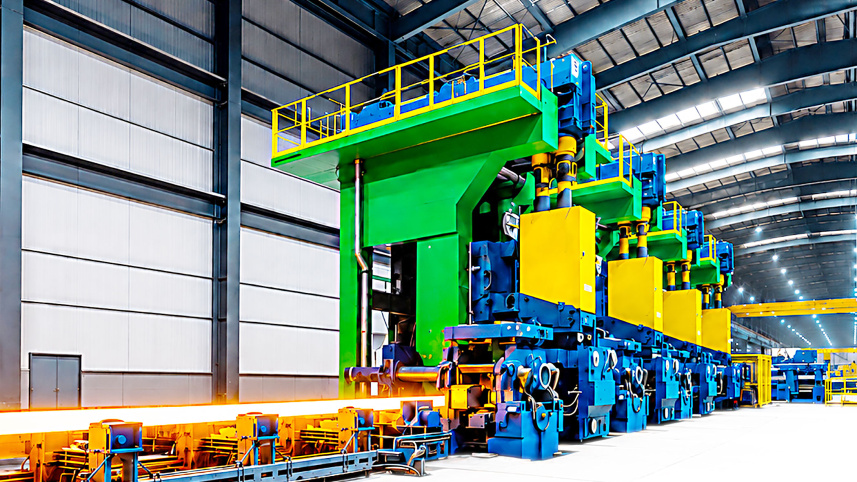
The company uses Electric Arc Furnace (EAF) technology to produce refined steel while controlling impurities that may affect structural performance. This is combined with Advanced Thermo-Mechanically Treated, or TMT, technology to manufacture rebars designed to provide both strength and ductility.
That combination is particularly important in structures designed for seismic resilience. Rather than strength alone, reinforcing steel must also be capable of deforming and absorbing energy without sudden fracture. AKS manufactures earthquake-resistant grade rebars to international quality standards, positioning material performance as an integral part of safer construction.
Its manufacturing capacity has also received international recognition. At its Sitakunda plant, AKS secured a Guinness World Records™ title for producing the most steel rebars in one minute, manufacturing 52 rebars measuring 108 metres each within 60 seconds. The achievement highlighted the company’s High-Speed Delivery system and broader investment in modern steelmaking technology. AKS has achieved Superbrands Award for four consecutive years, reflecting sustained consumer trust and brand strength in the Bangladeshi market.
More recently, the company introduced B700C-R, which AKS describes as the strongest rebar grade manufactured in Bangladesh to date. Designed for applications requiring high strength, ductility and reliability, the grade is aimed particularly at high-rise buildings and critical infrastructure, where greater load-bearing capacity and structural resilience are key considerations.
According to the company, local production of such high-grade rebar can also reduce dependence on imported materials for demanding construction applications.
Alongside product development, AKS has incorporated a number of environmental measures into its Sitakunda manufacturing facility. These include solar power and rainwater harvesting, as well as Water Treatment Plants and closed-loop systems that allow process water to be treated and reused. A Fume Treatment Plant manages emissions, while waste and by-product recovery systems are intended to minimise material loss.
As Bangladesh continues to build for a denser and more climate- and disaster-conscious future, structural safety will increasingly depend on decisions made at the material stage. Through advanced steelmaking, higher-performance rebar and more resource-conscious production, AKS is seeking to make resilience part of that foundation.
 For all latest news, follow The Daily Star's Google News channel.
Comments