


Building resilience in flood-prone Bangladesh
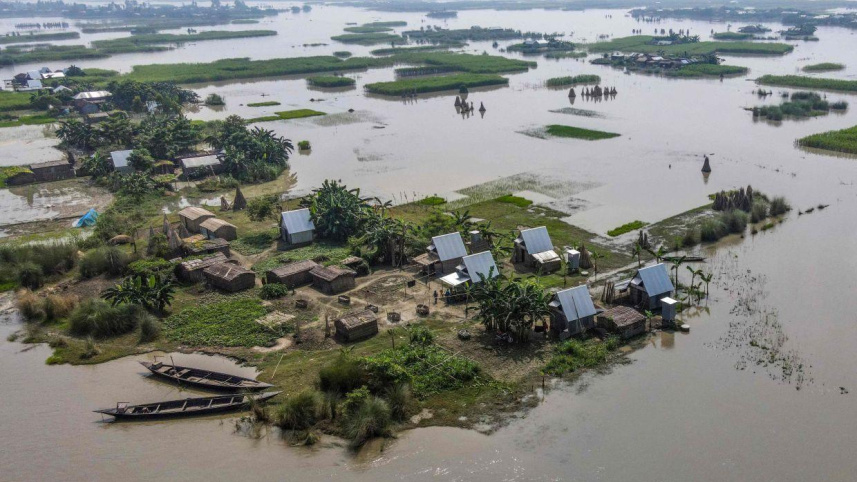
Last year’s flood level can become a reference when families in Bangladesh’s flood-prone areas build or repair their homes. How high the water rose, which part of the plinth was damaged or how long the base of a post remained wet can inform decisions during the next round of construction. A rural house is often built and improved gradually rather than completed all at once. It changes with experience, need and available resources.
Bangladeshi landscape architect and sustainability advocate Khondaker Hasibul Kabir argues that floods should not be understood only as an enemy that must be kept away. Over generations of living with seasonal water, communities in different parts of the country have developed their own ways of building homes and organising settlements.

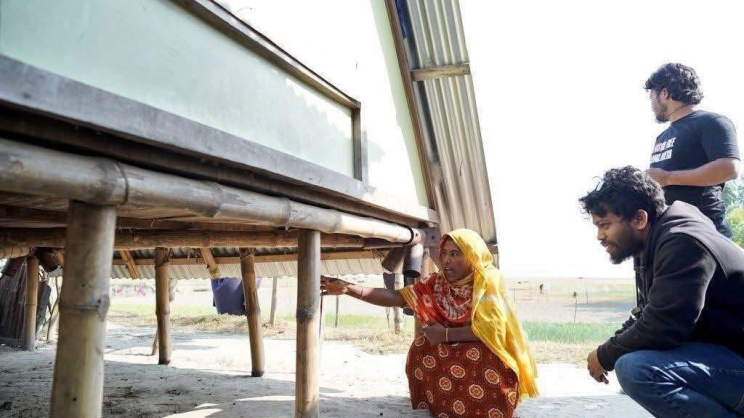
Kabir compares these variations in building traditions to language. Just as speech and accents change from place to place, so can the logic of making a home. He also points to the different house forms found among indigenous communities to illustrate how architecture can be shaped not only by environmental conditions and materials, but also by culture and ways of living.
The height of the land matters greatly in flood-prone areas. Traditional rural building practices include raising homesteads on earthen mounds. Earth excavated from ponds or canals may be used for this purpose, then compacted to reduce later settlement. Grass and other vegetation along the slopes can help bind the soil and protect it from erosion.
The usefulness of planting can extend beyond holding the mound together. Trees around a homestead can provide fruit and timber for later repairs while serving other practical purposes around the compound. Deep-rooted vegetation can help stabilise slopes, while species able to tolerate prolonged water can be placed lower down. Landscaping, viewed this way, can become part of how a homestead functions rather than an addition made simply for appearance.
Within the compound, some features can take on different roles when the water rises. A bamboo or timber machan can serve as a storage platform in everyday use and as a raised space during floods.

Flood damage is rarely distributed evenly across a house. The sides of an earthen plinth can erode, while bamboo or timber posts may deteriorate where they remain in contact with damp soil. The lower sections of walls are particularly exposed to prolonged water, and a roof that is poorly secured can become vulnerable when strong winds accompany heavy rain or flooding.
These weak points can often be addressed through small but practical changes to the structure. A dowa-posta is a brick perimeter around an earthen plinth that helps protect its sides from erosion. A kaatla, also known as shiri, supports a bamboo or timber post on a small concrete base and keeps its lower end away from wet ground.
Other techniques accept that certain parts of a house may eventually need replacement. Lower wall sections can be constructed separately so that a damaged portion can be changed without disturbing the entire wall above it. In earthen houses documented in parts of Sylhet, internal bamboo or timber frameworks have also been used. If portions of the earth covering are damaged, the supporting frame can remain standing, allowing the wall to be repaired rather than requiring the whole structure to be rebuilt.

Water arriving from the roof presents another challenge. Extended eaves can reduce the amount of rain striking walls directly, while gutters can carry runoff away from the base of the house. This helps prevent falling water from cutting into the soil around a plinth or repeatedly splashing the lower walls. Collected rainwater can also be directed into a container for household use.
Roof form matters as well. Traditional akchala, dochala and chouchala roofs do not respond to wind in the same way. Established construction guidance identifies a properly connected chouchala, or hipped roof, as more resistant to strong winds than simpler lean-to or gabled forms. The strength of the connections between the roof and the rest of the structure can therefore matter as much as the covering material itself.
Knowing what might work, however, does not mean every household can put it into practice.
Climate activist Sohanur Rahman has encountered this gap while working with flood- and erosion-prone communities, including those in Kurigram. From his experience in char areas, residents may already know how high a viti, or homestead, needs to be raised. The obstacle can instead be the money, materials or stable land needed to put that knowledge into practice.
The difficulty can extend beyond the house itself in char areas. River erosion can make the ground on which a family is investing equally uncertain. Strengthening a home becomes a more complicated decision when the land beneath it may also be lost or abandoned.
For this reason, Rahman stresses the importance of support before a disaster, rather than relying entirely on assistance after homes have already been damaged. Giving households the means to raise a homestead, repair a vulnerable component or obtain materials beforehand can create opportunities to reduce losses.
Problems can also emerge when externally provided housing does not suit local patterns of living. Rahman recalls a post-disaster housing intervention in which a design associated with another region did not fit the everyday needs of local residents. People later altered openings and added spaces to make the houses work for their own routines.
The example shows that technical improvement alone does not necessarily make a house suitable for the people who will live in it. How rooms are used, how people move through the house and what activities the space needs to accommodate also belong to the design.

At the same time, local knowledge should not be treated as flawless. Kabir cautions that traditional houses can have shortcomings in areas such as ventilation, durability or structural safety. Past experience may also be insufficient when future conditions fall outside what a community has previously encountered.
Professional expertise can be most useful when it strengthens rather than erases what already exists. Architects and engineers can identify structural weaknesses and risks that experience alone may not reveal, while residents, masons and craftspeople contribute an intimate understanding of local land, water, materials and everyday use.
For flood-prone rural Bangladesh, the answer may therefore be less about finding one ideal house than making a series of appropriate choices. A homestead may need to be raised, a post lifted away from damp soil, a vulnerable wall made easier to repair or roof water carried safely away.
 For all latest news, follow The Daily Star's Google News channel.
 The resilience of a home is not determined only by how permanent its materials appear. It also depends on how well the house can endure water, how easily damaged parts can be repaired and how effectively it can be adapted before the next flood arrives.
Comments